Why healthcare is the hardest brief
Most sites can define an acceptable outage. A warehouse can lose an hour. An office can send people home. A hospital has patients on ventilators, theatres mid-procedure, refrigerated blood and pharmacy stock, and imaging equipment that does not appreciate an unplanned shutdown.
That changes the engineering brief in three ways. The transfer has to be automatic and fast. The system has to keep working when a component of it fails. And the whole thing has to be provable, because it forms part of a documented essential-services obligation rather than a preference.
Australian rules, not American ones
A lot of the material online about hospital generators is written for the United States and cites NFPA and NEC requirements. Those do not apply here, and following them will not satisfy anyone auditing an Australian facility.
In Australia, electrical installations in patient areas fall under AS/NZS 3003, the wiring rules generally under AS/NZS 3000, and the supply arrangements for essential services and body-protected and cardiac-protected areas involve AS/NZS 3009. Facilities are also bound by state health infrastructure guidelines and their own accreditation requirements.
The practical consequence is that the design conversation is with your facility engineer and your consulting electrical engineer, and the generator supplier's job is to meet the specification that comes out of it. Anyone quoting a hospital job off a load figure alone has skipped the part that matters.
Redundancy usually beats capacity
The temptation on a critical site is to specify one very large machine. For healthcare, redundancy is generally the better spend.
Two or more sets synchronised in parallel mean a single failure costs capacity rather than supply, and it means one unit can be taken out for service without leaving the site unprotected. It also lets generation follow demand instead of running one oversized machine at light load, which as we cover in diesel longevity is its own slow problem.
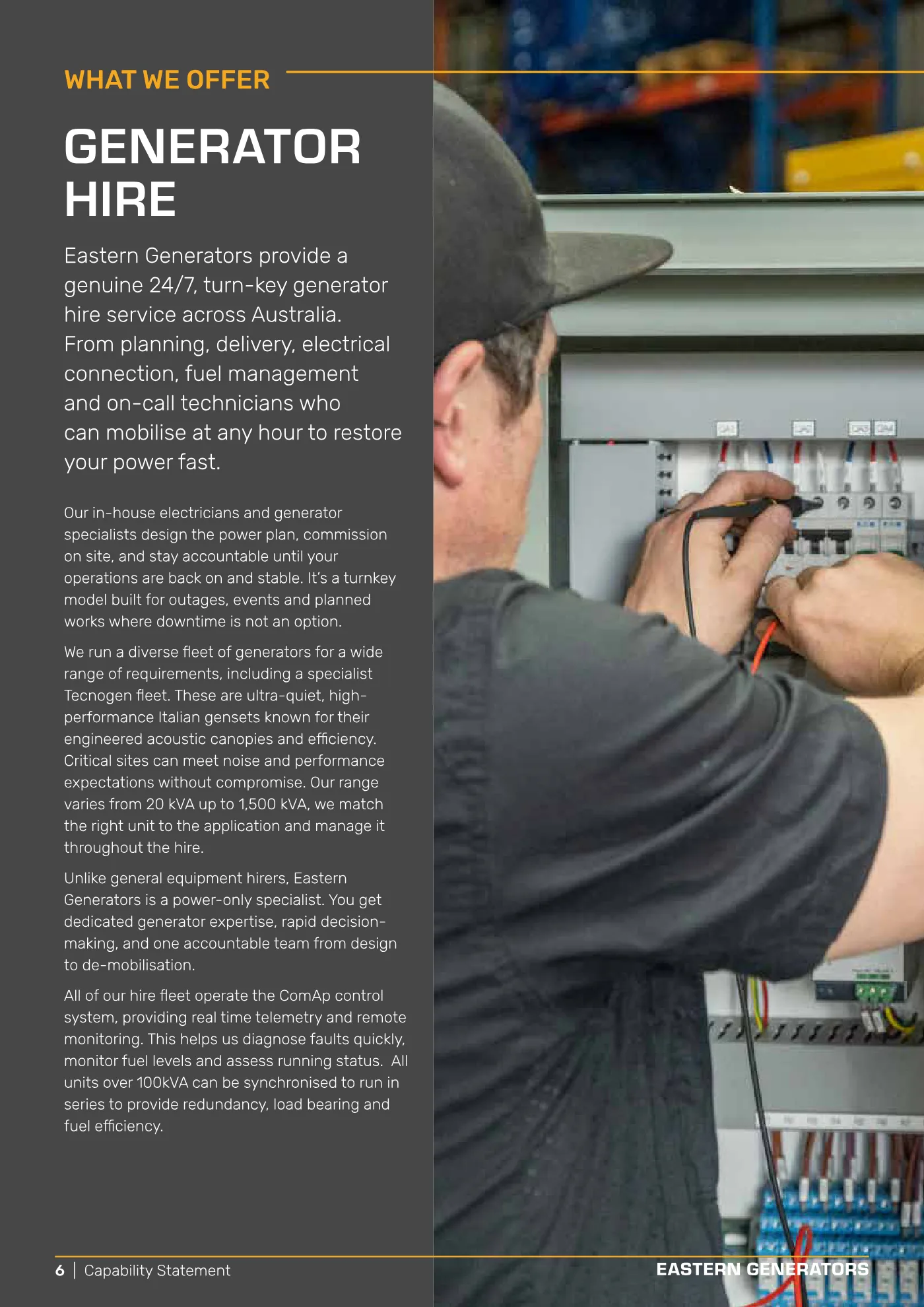
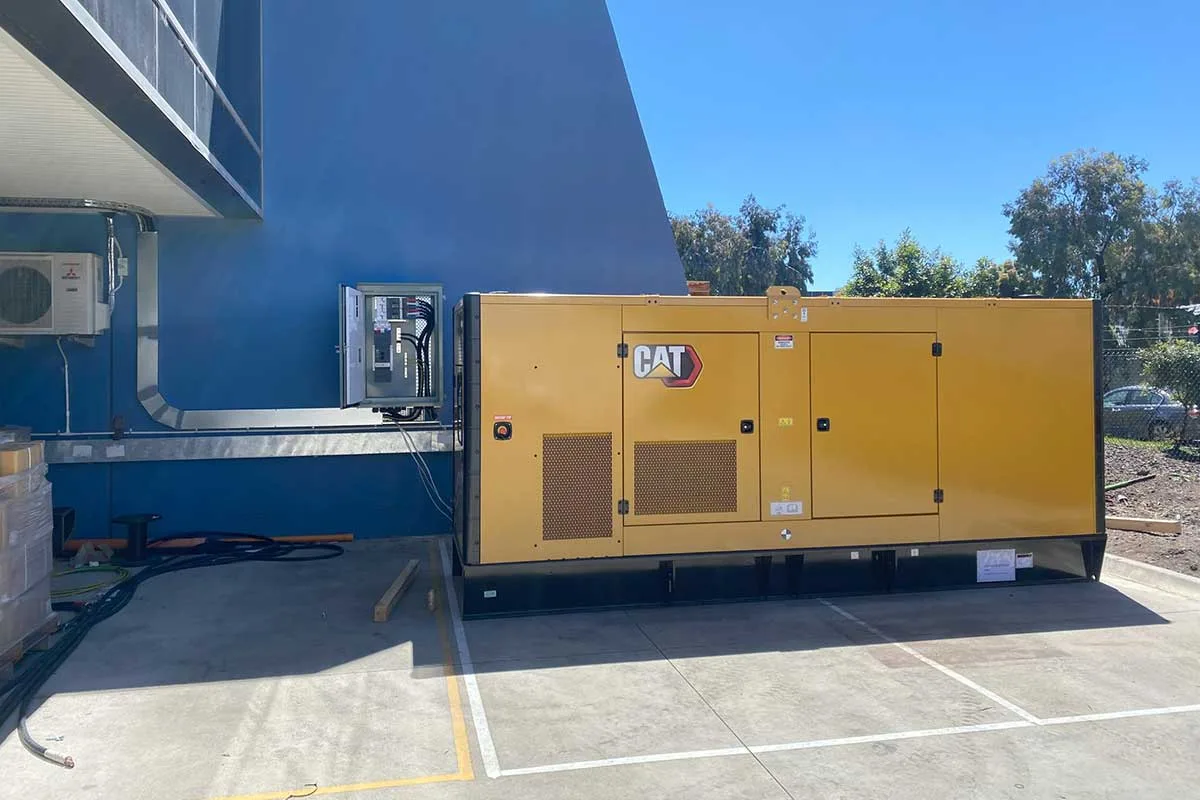
Above 100kVA our sets synchronise in parallel, with ComAp control systems managing the sharing and the sequencing.
Temporary power during upgrades
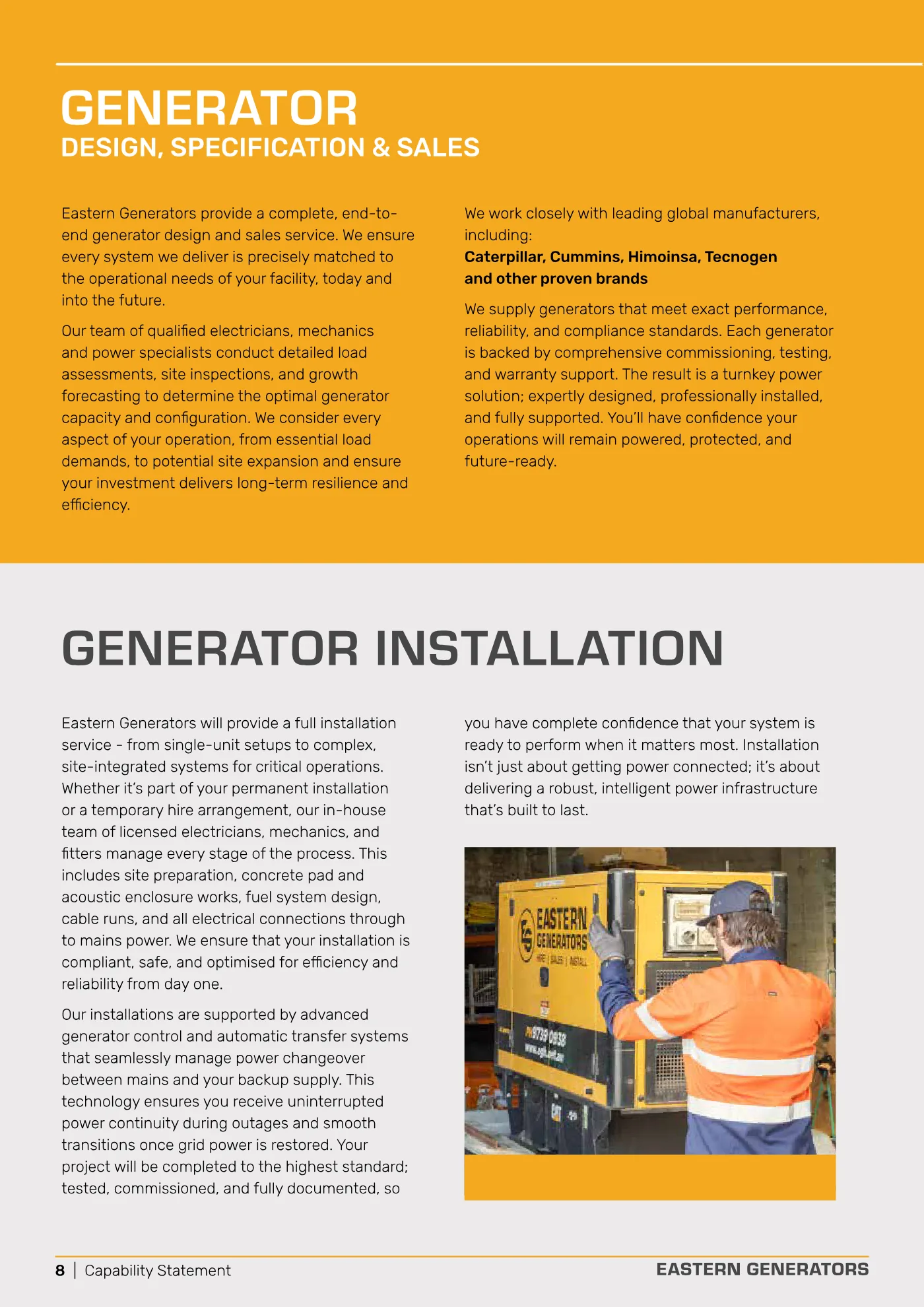
The other healthcare job, and the one we are called for most, is temporary power while permanent infrastructure is out of service. Switchboard replacements, transformer works and main-supply upgrades all require the existing supply to be interrupted on a building that cannot be interrupted.
That work is planned to the hour. The temporary sets are positioned and connected while the mains are still live, tested under load before anyone touches the permanent installation, and left with attendance and monitoring for the duration.
We have done exactly this at the Alfred Hospital in Prahran, working with Stowe Australia: multiple temporary units up to 1,250kVA supplied for critical backup of the intensive care unit during major switchboard upgrades. That job is on our hire record because the machines are the same fleet; what makes it a healthcare job is the planning around them.
Testing without disrupting the ward
A hospital generator has to be proven regularly, and the site cannot be inconvenienced to prove it. That is a genuine tension and it is solved with method rather than luck.
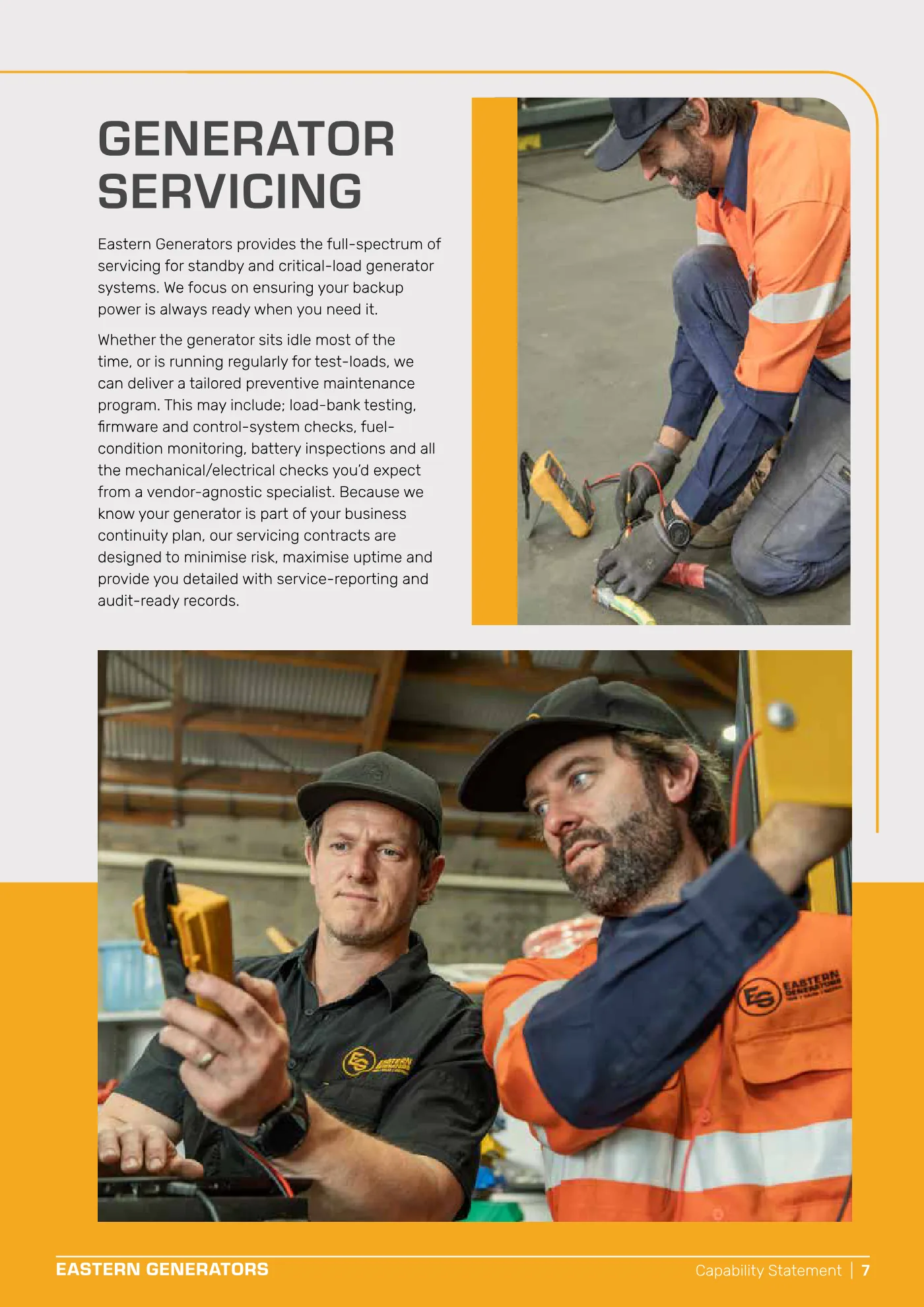
- Load-bank testing applies a real, measured load without touching the building's supply, so capacity is verified rather than assumed.
- Staged transfer testing exercises the changeover on a defined board at a planned time rather than the whole site at once.
- Condition monitoring between tests catches the battery, coolant and fuel problems that cause most failed starts.
- Documented results after every visit, because on an accredited facility the record is part of the requirement.
What to ask a supplier
For a healthcare site the questions are narrower than usual. Do they hold enough fleet to provide redundancy and a spare? Are the electricians in-house and available at any hour? Can they synchronise sets and control them properly? Have they worked on a live, occupied hospital before, and can they name it?
We can answer all four, and our maintenance programs are built around the documentation an accredited facility needs. If you are planning an upgrade or reviewing your essential-services arrangements, talk to us early, while the dates are still movable.