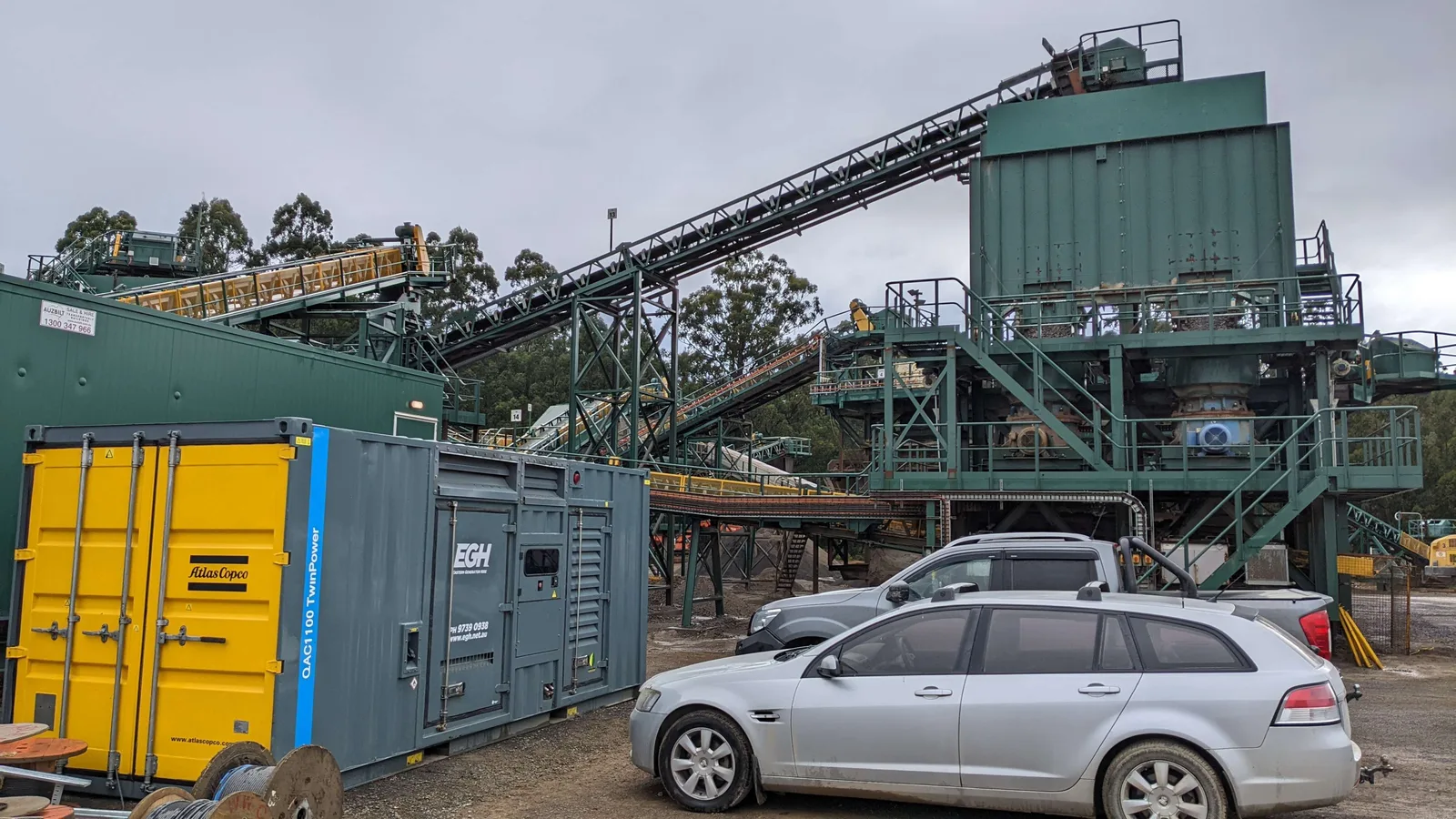
Industrial sizing is a different problem
Sizing a generator for a shop or an office is largely an addition exercise: total what has to run, allow for the biggest motor start, add headroom. On an industrial site that method produces a number that is either wildly expensive or quietly inadequate.
The difference is that industrial loads are not a static list. They are a process, with sequences, interlocks, soft starts, drives, welding plant and equipment that must never see a voltage dip. The generator has to serve the behaviour of the load, not just its magnitude.
Resistive versus reactive load
A resistive load, such as heating or incandescent lighting, is the easy case: it draws what it says it draws, and power factor is close to unity.
A reactive load, which means anything with a motor or a transformer in it, is the hard case. It draws current out of phase with voltage, so the generator must supply more apparent power (kVA) than the useful work (kW) would suggest. It also demands a large surge at start, commonly several times running current, which stresses the alternator's ability to hold voltage.
This is why generators are rated in kVA rather than kW, and why a site's power factor genuinely matters. On a heavily motor-driven site, sizing from kW alone will undersize the set.
Load factor, and the cost of oversizing
Once you have a figure, the next question is where the set will actually sit within its rating during normal running. Aim for roughly 50 to 80 percent.
- Under-loaded generators wet stack, glaze bores, foul injectors and burn fuel inefficiently per unit delivered. Chronic light running is a maintenance liability.
- Over-loaded generators run hot, hold voltage poorly on motor starts, and leave nothing for the load you add next year.
Oversizing is the more common industrial mistake, because it feels like buying safety. It is worth being precise instead: a correctly sized set on a maintenance program is more reliable than an oversized one idling its life away.
Non-linear loads and harmonics
Variable speed drives, rectifiers, UPS systems and modern switch-mode equipment draw current in pulses rather than smoothly. Those pulses inject harmonic currents back toward the source.
The grid absorbs that easily. A generator, which is a much smaller and stiffer source, does not. Harmonics cause additional alternator heating, voltage distortion that upsets sensitive equipment, and in bad cases control instability.
Where non-linear load is a significant proportion of the total, the alternator needs to be specified for it, and sometimes the set needs to be larger than the load alone would indicate. This is a design decision made before purchase, not a problem to discover at commissioning.
One large set, or several in parallel
For a critical industrial load, the instinctive answer is one big generator. It is often the wrong one.
Sets synchronised in parallel give you redundancy, because losing one unit costs you capacity rather than the whole supply. They also let you match generation to demand, running two sets in the efficient band during normal operation and bringing a third on for peaks, instead of running one large machine at 30 percent all day.
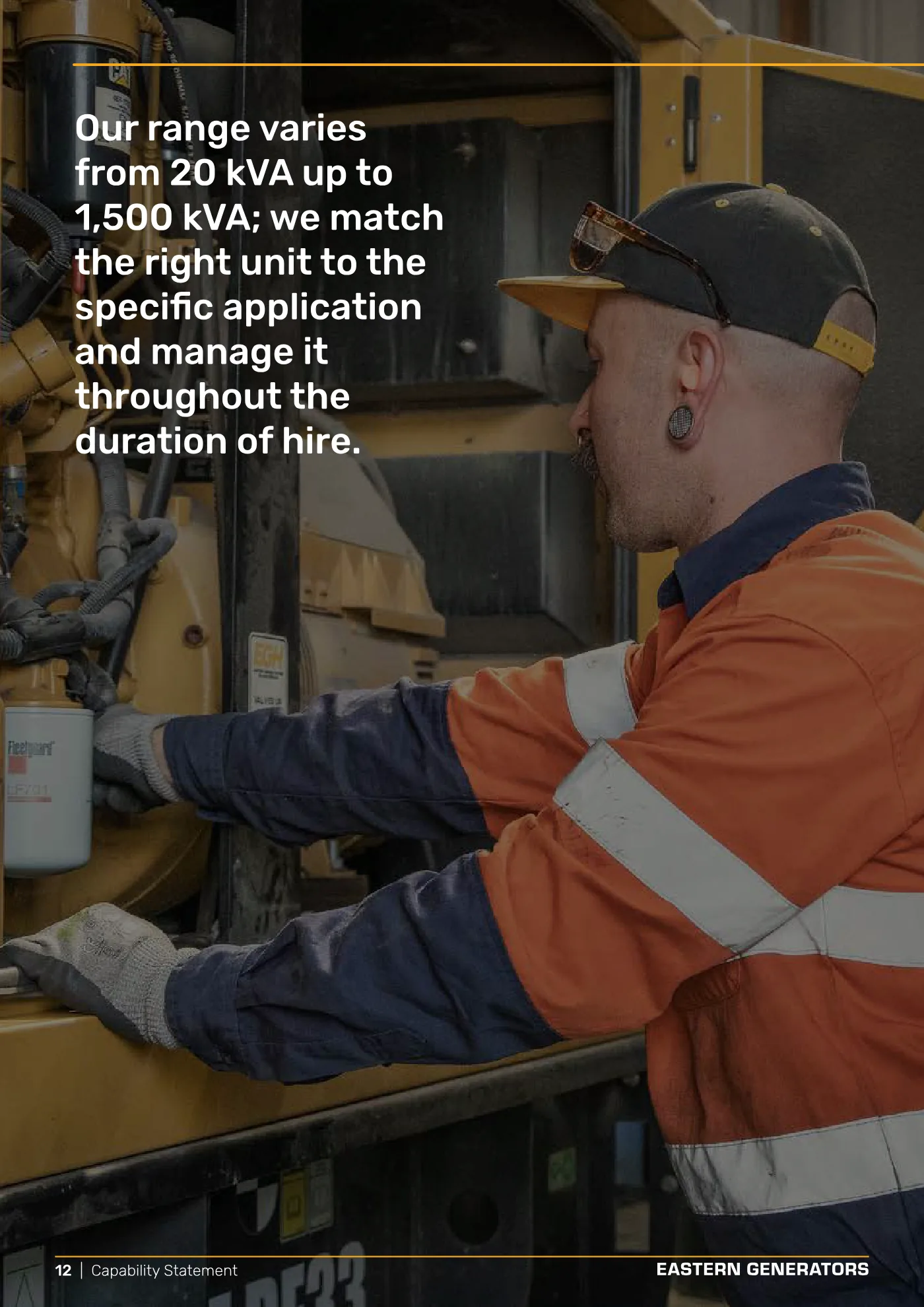
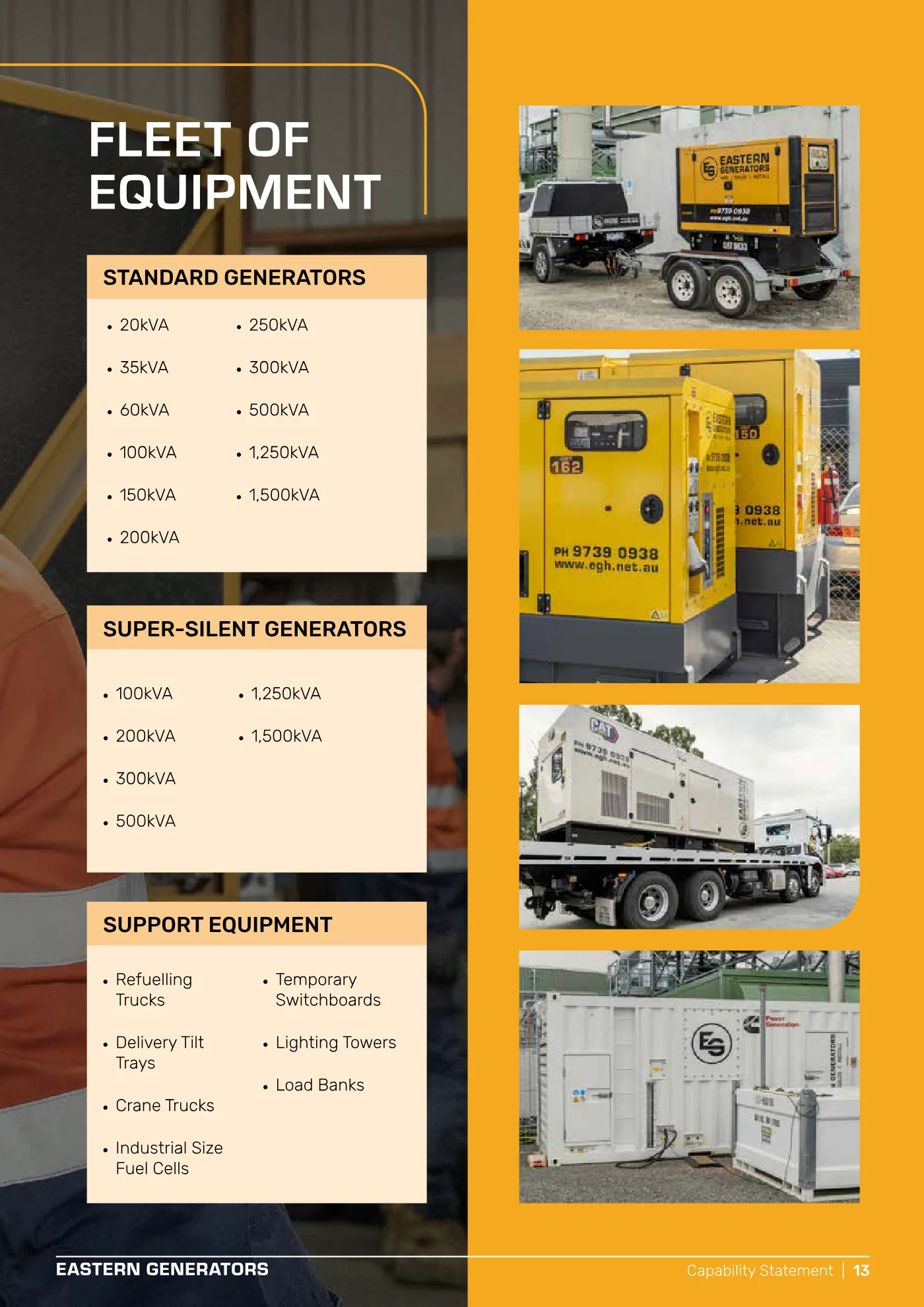
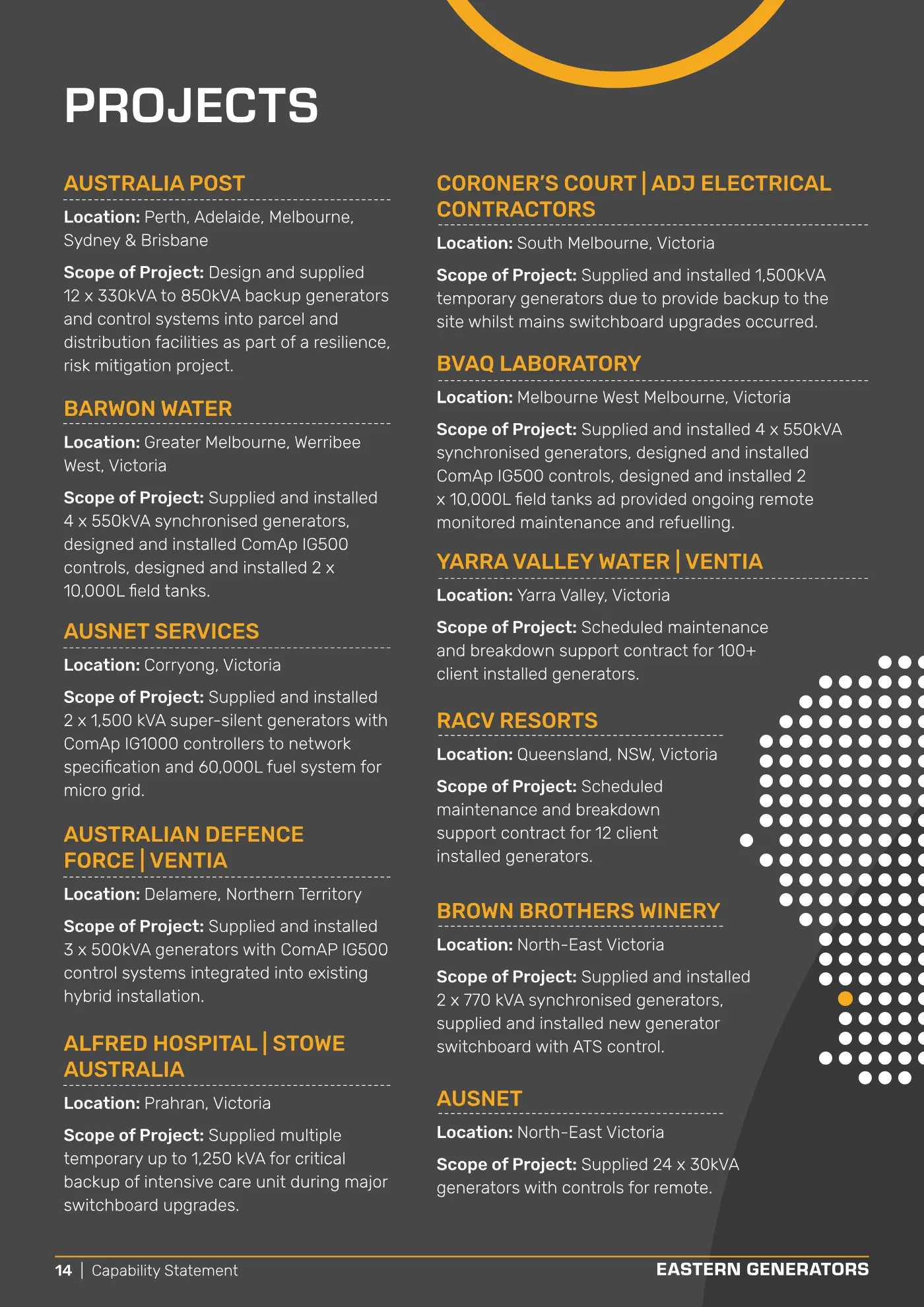
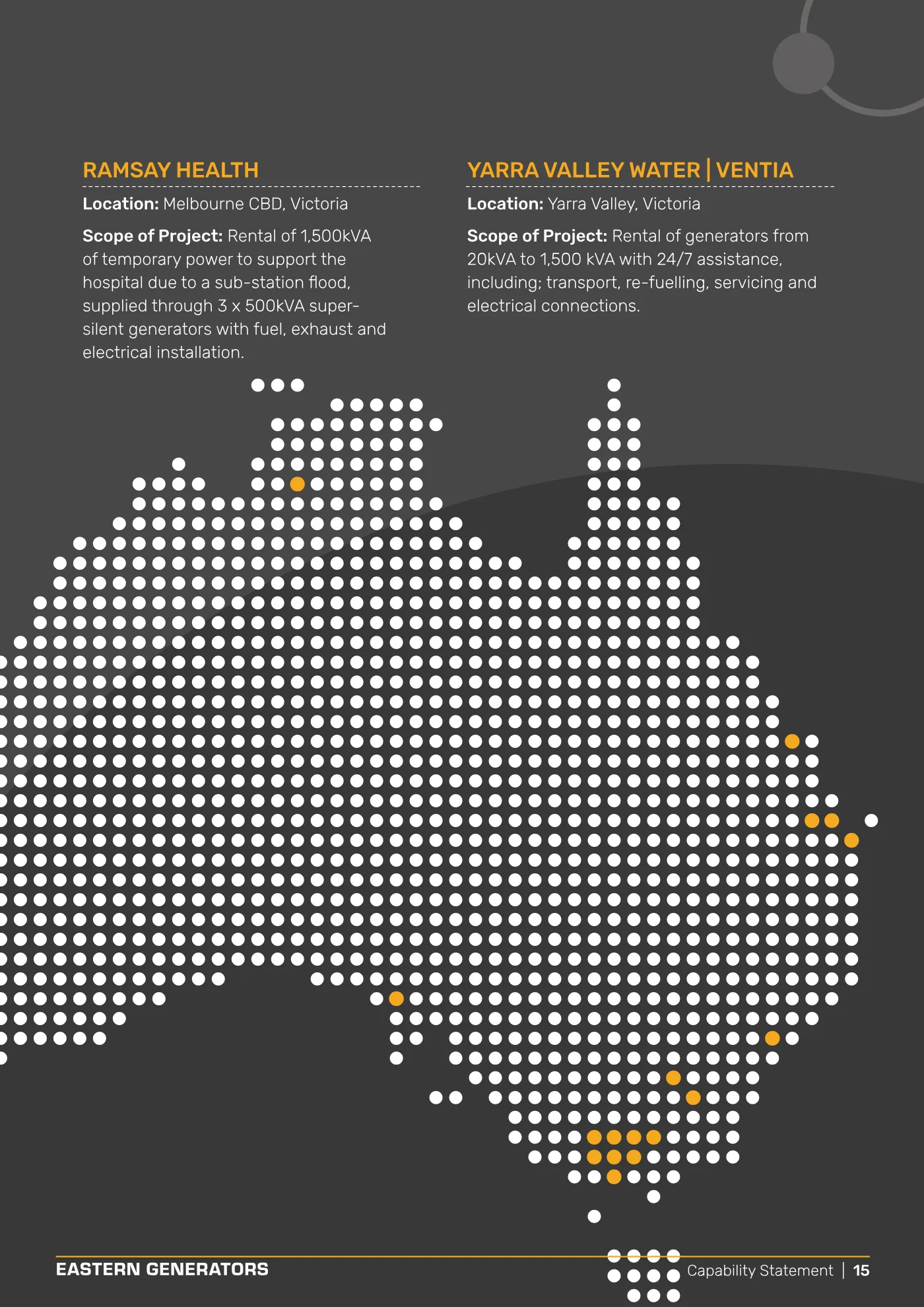
Above 100kVA our sets can be synchronised in parallel, and we build and control multi-set installations with ComAp control systems. Our largest jobs run exactly this way: two 1,500kVA sets on a micro grid, four 550kVA sets synchronised for a laboratory.
The practical route to a number
Work through it in this order: build a real load schedule with running and starting figures, identify the largest single start and whether it is soft started, establish the proportion of non-linear load, decide the redundancy the site's risk justifies, then check the result against space, acoustics and fuel storage.
Our sizing calculator handles the first two steps and shows its working. The rest is worth a conversation, and it is what our team does daily across industrial sites in Melbourne and Victoria.