Where the line actually sits
Let us deal with the legal question first, because it removes most of the debate. In Victoria, and everywhere else in Australia, work on a building's fixed electrical installation must be carried out by a licensed electrician. Connecting a standby generator to your switchboard is exactly that.
So the genuine do-it-yourself space is small: you can choose the site, you can prepare the slab or the pad, you can arrange the civil works, and you can plug appliances into a portable generator's own outlets with a suitable lead. What you cannot do is wire a set into the building.
That is not a technicality invented to protect tradespeople. A generator connected without a proper changeover arrangement can push power back into the network, which puts the linesperson working on the fault at risk. It is one of the few mistakes in this trade that can kill somebody you will never meet.
The changeover switch is the whole job
If you take one thing from this article, take this: the generator is the easy part. The changeover arrangement is what makes the installation safe, and it is where the design effort goes.
A changeover switch guarantees the site is connected to either the mains or the generator, never both. It can be manual, where somebody attends and throws it, or automatic, where the controller senses the outage, starts the set, transfers the load and then hands back when the mains return.
Which one you need is a risk question rather than a budget question. If the site can tolerate ten minutes of darkness while somebody walks to the switchroom, manual is fine and cheaper. If the load is refrigeration, medical, process or data, the transfer has to happen without a person in the loop.
What a professional install actually involves
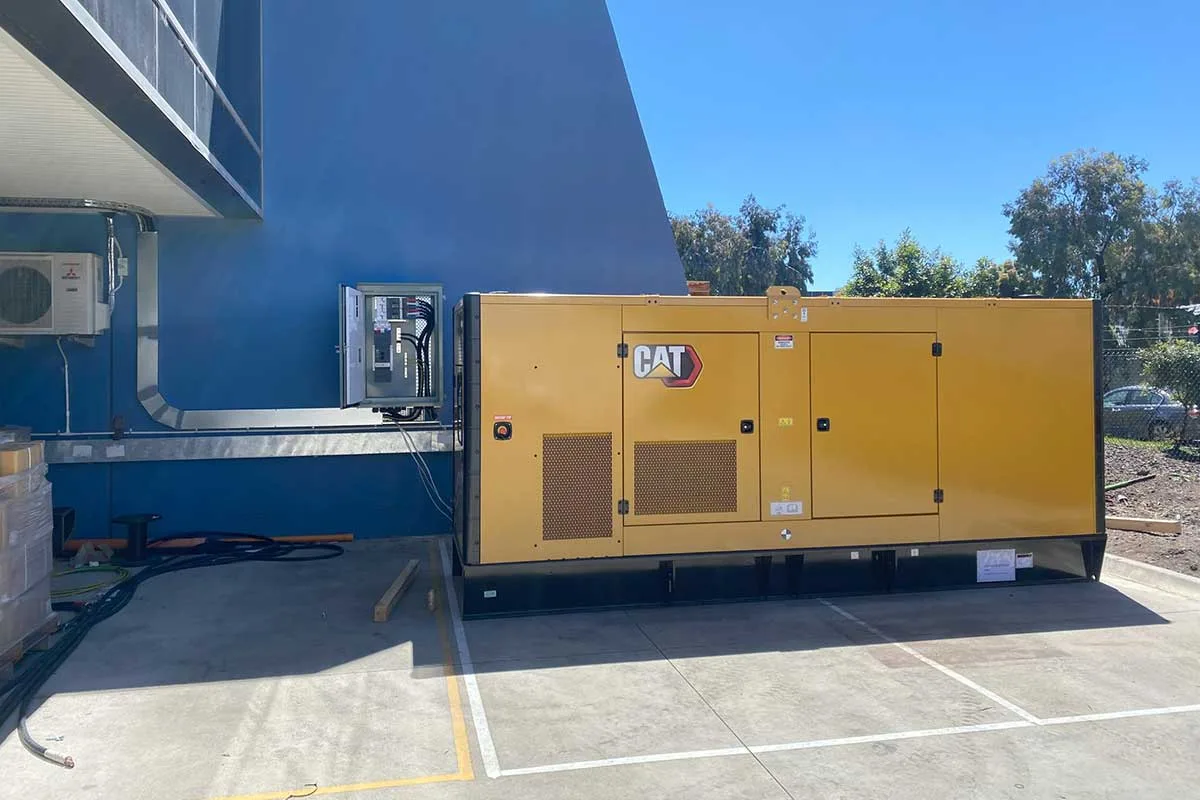
A permanent standby installation is a small construction project, not a delivery. The sequence runs roughly like this.
- Site assessment. Where the set can physically go, how the exhaust and radiator discharge clear the building, what the acoustic constraint is at the boundary, and how a service truck reaches it in five years.
- Civil works. A level, drained, load-rated pad or plinth, plus bunding where fuel is stored.
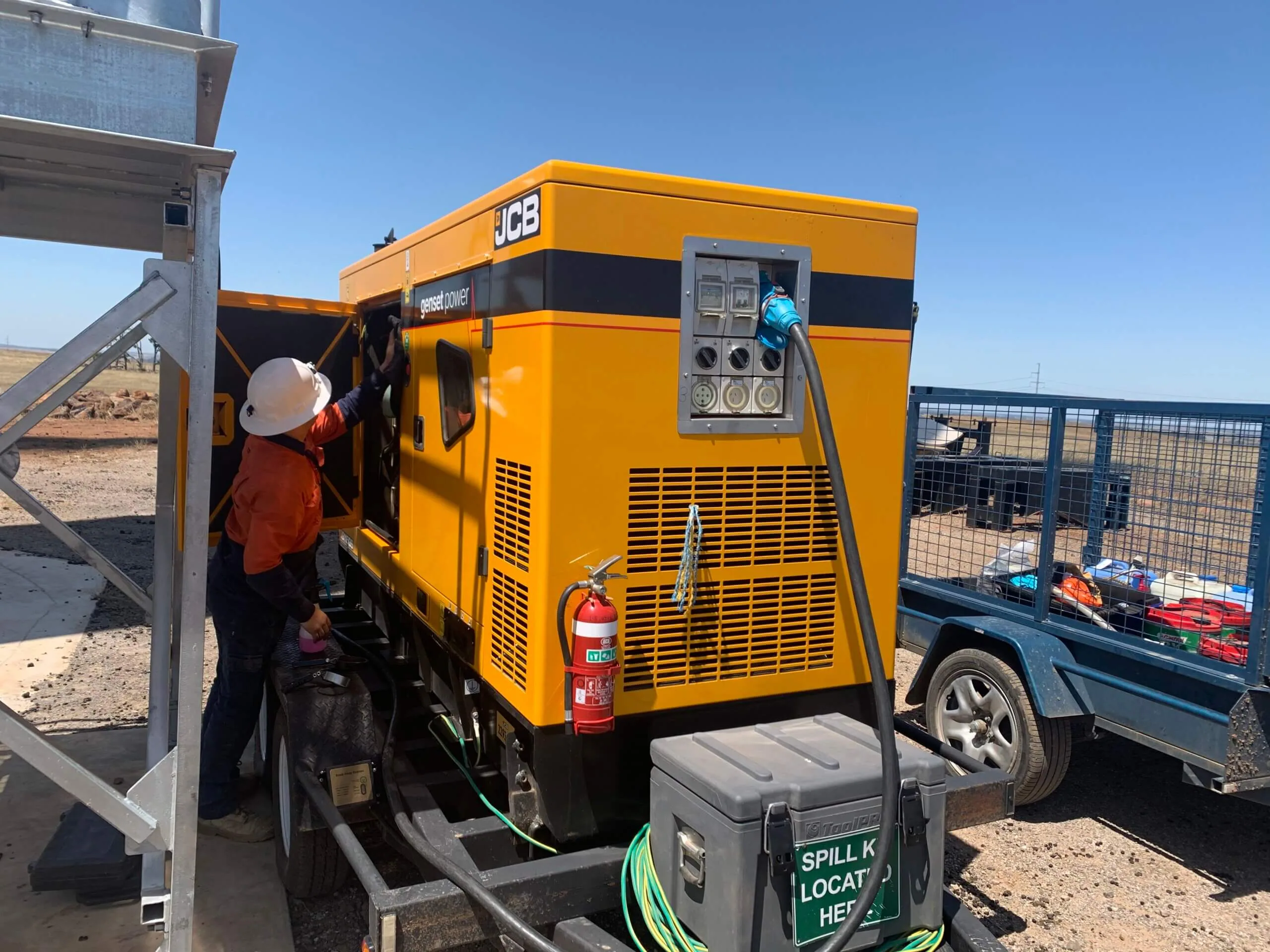
- Electrical. The changeover switch or automatic transfer switch, protection, cabling sized for the run, and earthing designed for the installation rather than assumed.
- Fuel. Day tank or bulk storage, fill point, venting, and bunding to contain a spill.
- Ventilation and exhaust. Enough air in for combustion and cooling, and exhaust routed so it does not re-enter the building or the intake.
- Controls. Integration with the building management system where there is one, plus remote monitoring if the site is unattended.
Miss any one of those and the machine still starts. It just does not do what you bought it for.
Commissioning is not a formality
An installed generator is an assumption until it has been commissioned. Commissioning is where the set is run under real load, the transfer is tested in both directions, the protection settings are proven, and the alarms are confirmed to actually reach somebody.
It is also where you get the documentation: the test results, the settings, the as-installed drawings and the maintenance schedule. On most commercial sites that paperwork is part of your continuity file and your insurer's expectations, so it is worth insisting on it rather than accepting a verbal all-good.
What it costs to get wrong
The failures we get called to on poorly installed sets are predictable: exhaust routed back under an eave so fumes track into the building, a set on soft ground that has settled and cracked its connections, no bunding under a fuel tank, a manual changeover nobody on the current staff knows how to operate, and an automatic transfer switch that has never been exercised since the day it went in.
None of those are exotic. They are all the result of treating the install as delivery plus a connection. We design, install and commission permanent sets with our own A-grade electricians and put them straight onto a maintenance program, because an installation that is never tested again is just a slower kind of failure.