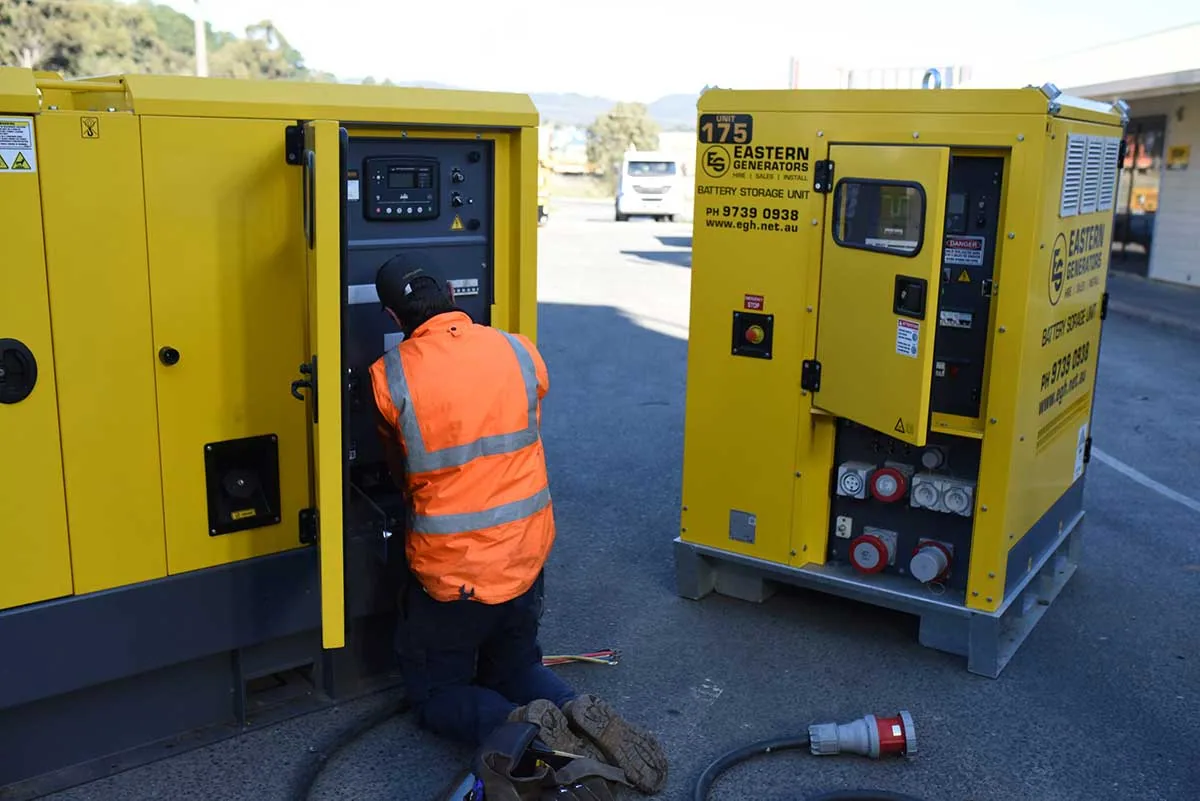
The five faults we actually attend
Across the fleets we hold maintenance contracts on, breakdown call-outs are dominated by the same short list. None of them are dramatic engine failures.
- Battery and charging faults. The leading cause of a set that will not start. Voltage looks fine; capacity under cranking load does not.
- Fuel system problems. Blocked filters from aged or contaminated fuel, water in the tank, microbial growth at the fuel-water interface.
- Cooling faults. Low or degraded coolant, blocked radiator cores, perished hoses, failed belts.
- Control and connection faults. A controller left in the wrong mode after a test, a tripped charger breaker, corroded terminals, a rodent-damaged loom.
- Transfer failures. The set starts perfectly and never picks up the load, because the changeover has not been exercised in years.
Every one of those is caught by a routine visit. That is the entire argument for having one.
What a service visit covers
A proper visit runs in three parts, in order, and the order matters: inspect before you change anything, because the condition of what you remove is the diagnostic information.
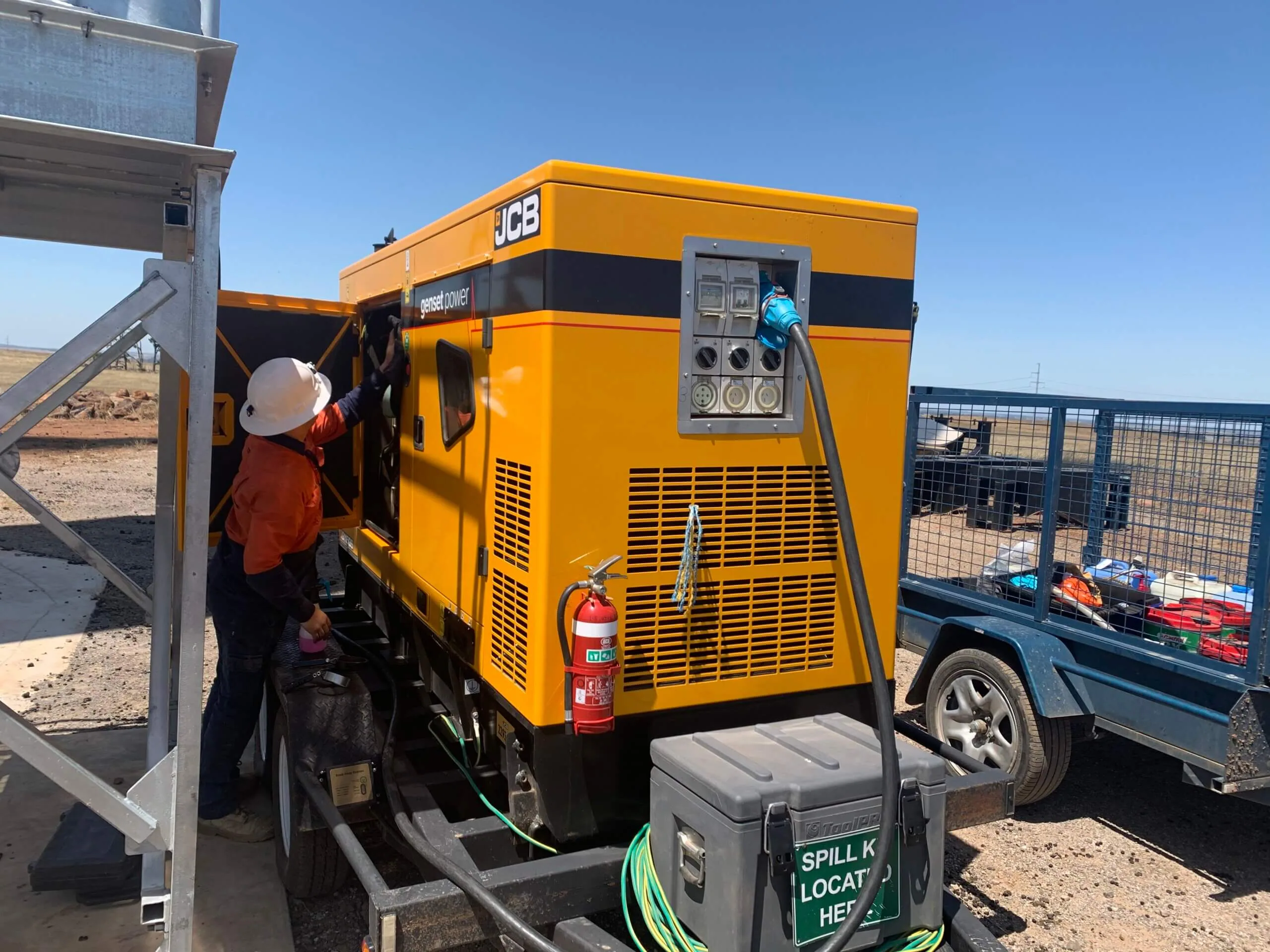
Inspect. Fluid levels and condition, battery state and terminals, belts and hoses, filters, air intake, exhaust and mounts, control settings and alarm history, and a look at the enclosure and site for anything that has changed since last time.
Replace. Oil and filters at interval, fuel filters and water separators, air filters, coolant on its own schedule, batteries when capacity rather than age says so.
Test. A start and run, ideally under load, with readings recorded. On critical sets that means a load bank rather than a no-load run, for reasons we go into below.
What you can do, and what you cannot
There is genuinely useful work an owner can do between visits, and a clear line past it.
Yours: a weekly or monthly look at the machine. Coolant and oil level in the sight glass, obvious leaks on the ground, the charger indicator, the controller in the correct auto mode with no active alarms, the enclosure clear of stored gear, the air intakes unobstructed, and nothing nesting in it.
Not yours: anything requiring isolation, anything electrical on the installation side, load testing, fuel polishing, coolant system work, and any adjustment to protection or control settings. In Australia the electrical work is licensed, and the mechanical work needs the right tools and specifications rather than good intentions.
Write down what you observe. A dated note that the charger light was out three weeks before the failure is worth a great deal to whoever attends.
How often is often enough
There is no single correct interval, and any supplier who quotes one without asking about your site is selling a schedule rather than a program.
The variables are run hours, duty (standby, prime or continuous), age and condition, environment, and above all what the site loses if the set fails to start. A generator protecting a data room in a coastal industrial area is a different proposition to one behind an office in Kilsyth.
We audit the asset first, then build the schedule around how it is actually used and the risk it carries. That is a slower start and a better program.
Load testing, and why the monthly start is not enough
A no-load test start proves two things: the battery cranked it, and it ran. It proves nothing about whether the set will carry your load, and repeated unloaded running actively harms the engine through wet stacking.
A load bank applies a real, measured electrical load so behaviour is recorded under conditions close to a genuine outage: voltage and frequency stability, temperatures, exhaust condition and the ability to take load steps. On a standby set that rarely sees real load, it is the only honest test there is.
Records are the deliverable
The physical work is half of what you should be paying for. The other half is the report: what was found, what was replaced, what was measured, and what is trending toward attention.
That record is what makes the program auditable, what tells the next technician what has been ruled out, and what turns a subjective sense that the generator is fine into evidence. Our servicing contracts are built around detailed reporting for that reason, and we service what is on your site whoever supplied it.