Why hire fleets are diesel
A hire generator has to solve a problem the customer did not plan for, at a location the supplier did not choose, sometimes at two in the morning. That constraint shapes everything.
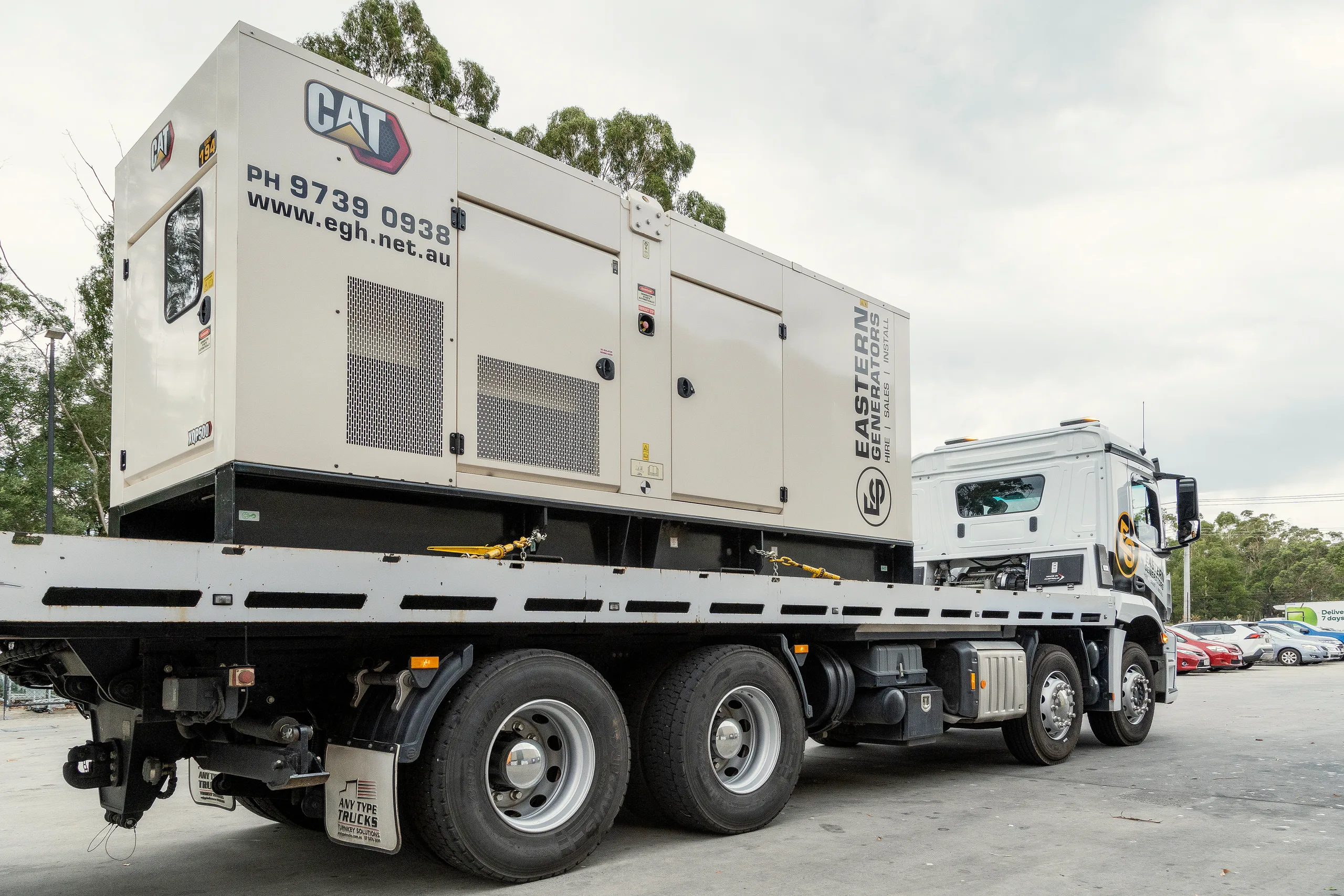
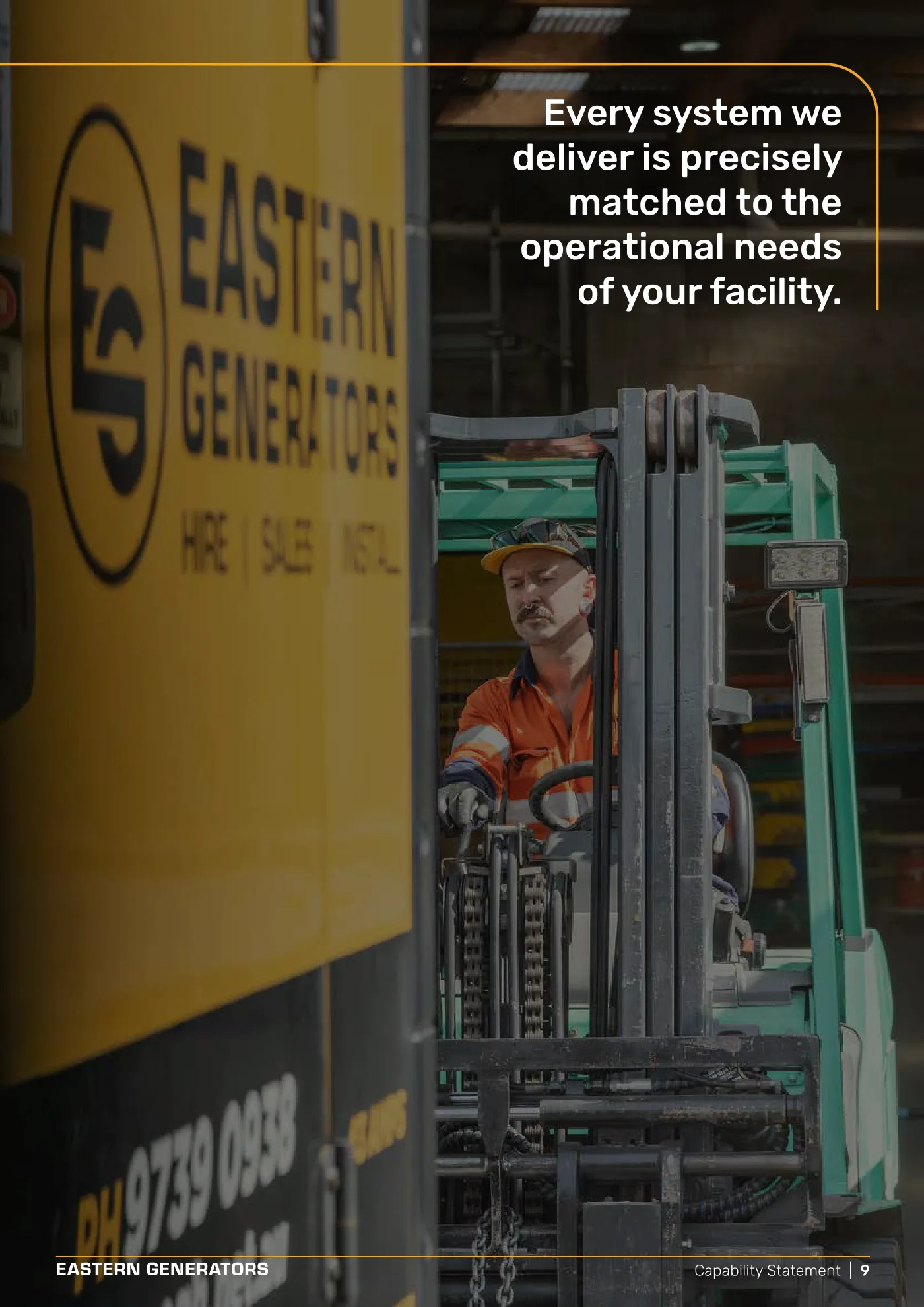
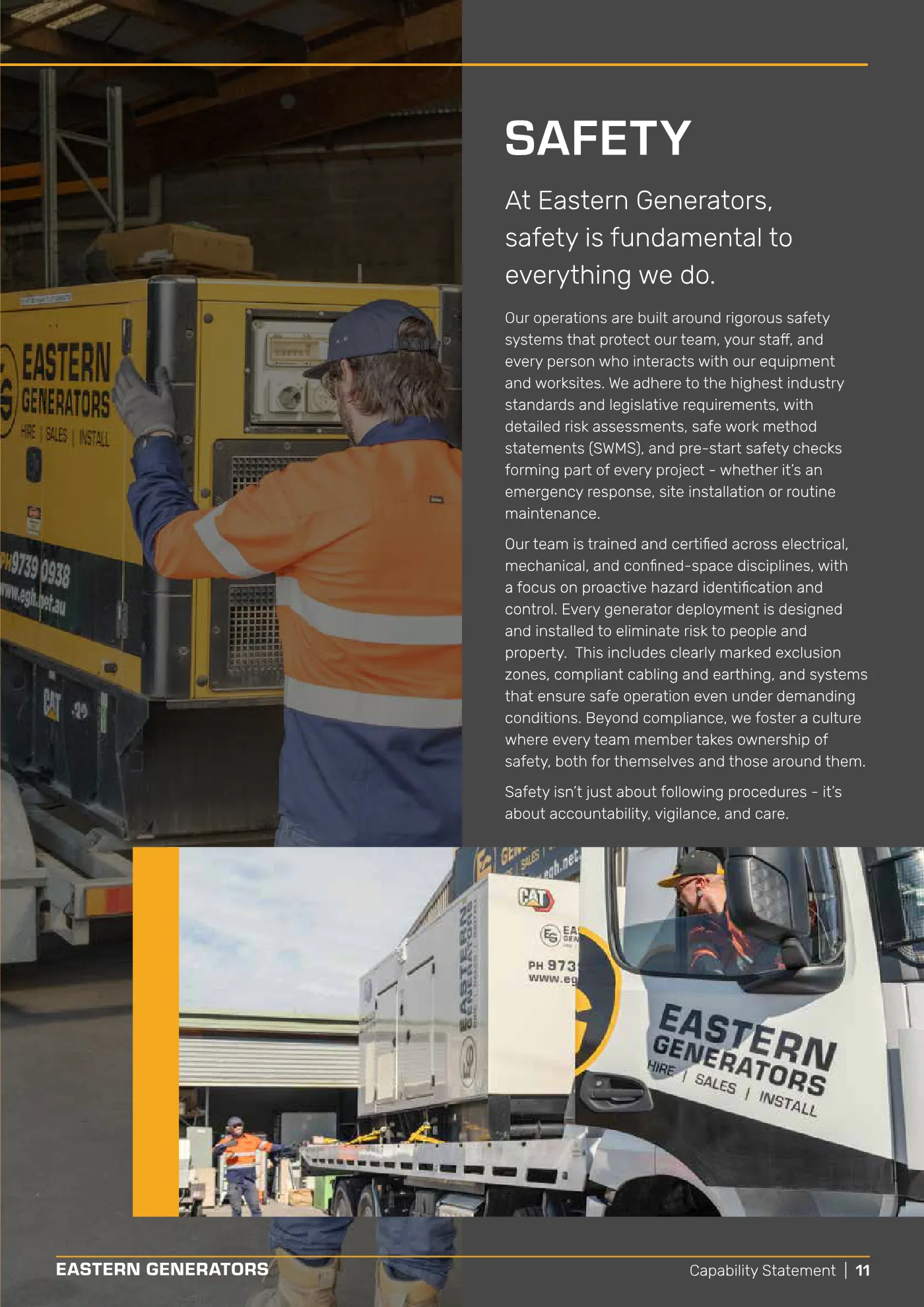
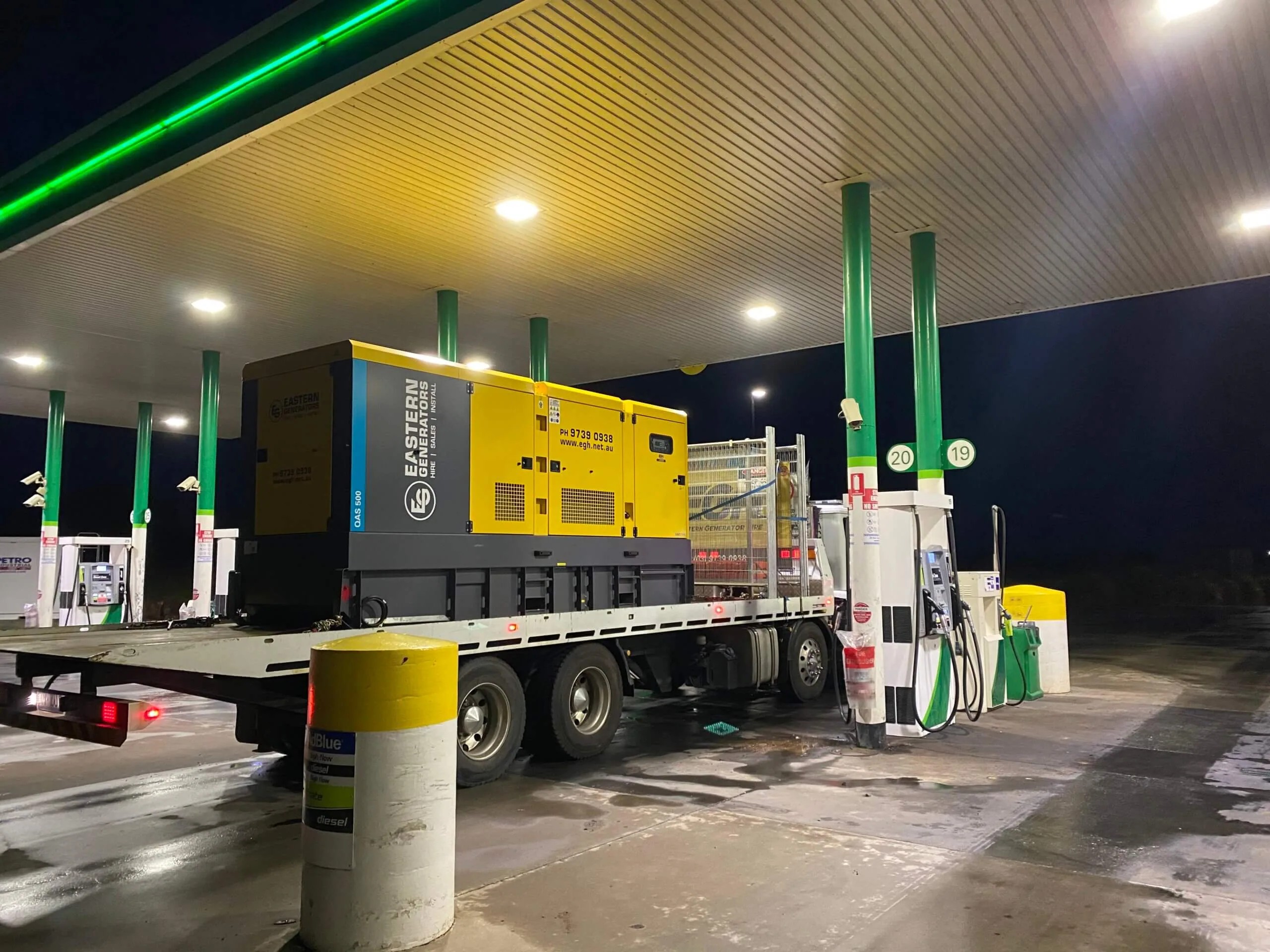
Diesel wins that brief because the fuel travels. A diesel set arrives with a full tank, we can put a bunded fuel cell beside it, and our own trucks can top it up on a schedule anywhere in Melbourne or greater Victoria. Nothing has to be connected, negotiated or booked in with a utility.
Diesel also holds a big energy advantage per litre of on-site storage. That is why a diesel set can run a site for days on what it brought with it, while an equivalent gas installation needs a supply behind it.
Where diesel wins
- Portability. Trailer or skid mounted, delivered on a truck, running within the hour.
- Energy density. Long run times from an on-board tank, extendable with fuel cells up to very large volumes.
- Load response. Diesel sets generally handle sudden motor starts and step loads well, which matters on construction and industrial sites.
- Availability. Parts, service and technicians are everywhere. So is the fuel.
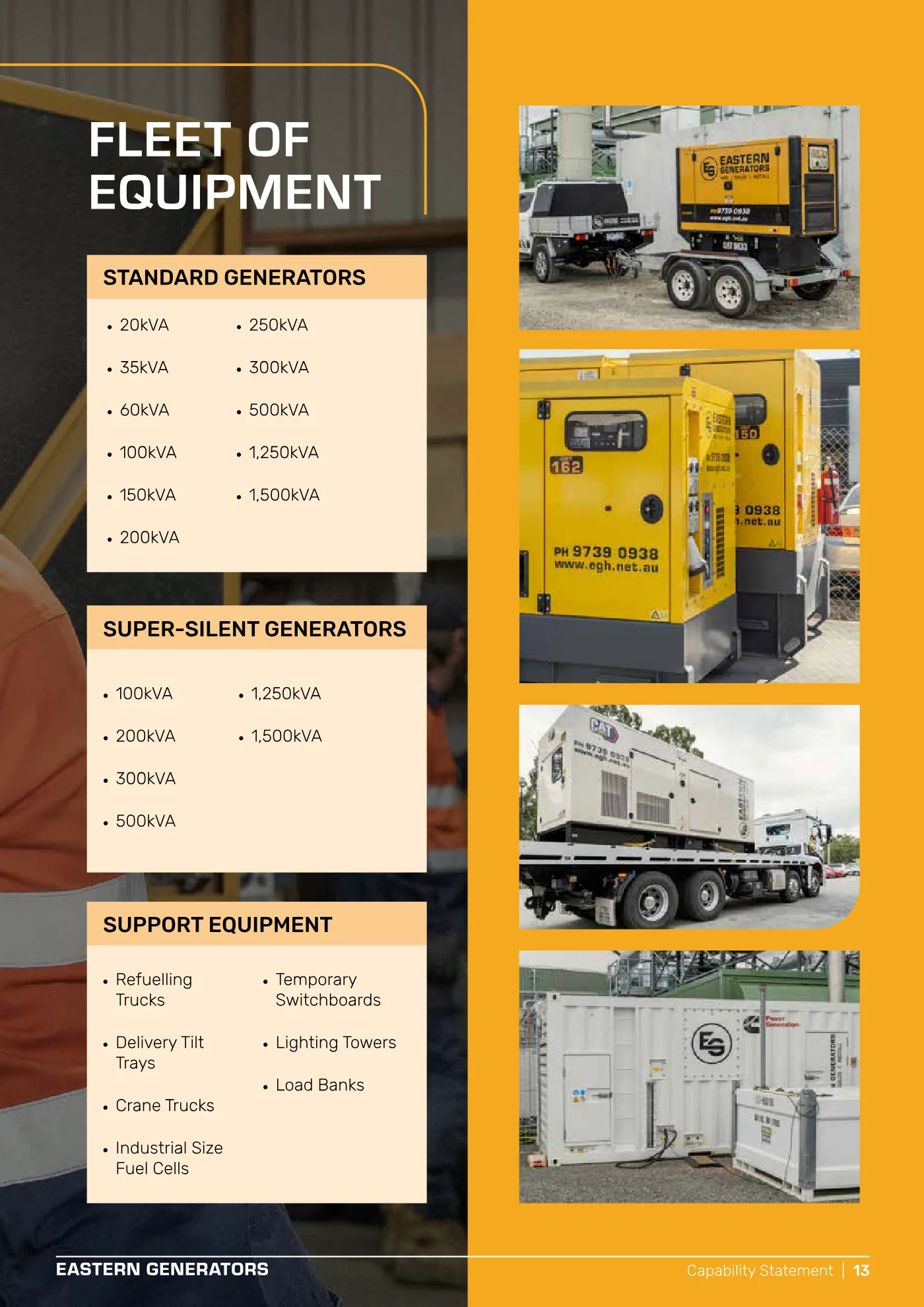
- Scale. The hire fleet runs 20kVA – 1500kVA, and above 100kVA sets can be synchronised in parallel.
Where gas genuinely makes sense
None of that makes gas a poor choice. It makes it a different choice, and on the right site it is clearly the better one.
- Permanent installations with reticulated gas. If natural gas is already at the property, the fuel problem disappears and so does the refuelling schedule.
- Emissions and odour. Gas burns cleaner, which matters where the exhaust is near occupied space, food handling or a sensitive neighbour.
- Noise. Gas engines are typically a little quieter, which can help at a boundary that is already marginal.
- Very long runs on a fixed site. Where a pipeline supply removes the storage limit entirely.
- Fuel storage restrictions. Some sites simply cannot store the volume of diesel a long run would need.
Fuel logistics is the real difference
Strip the two options back and the comparison is not about engines at all. It is about where the energy comes from and who is responsible for keeping it there.
With diesel, the fuel is a delivery problem we solve for you: scheduled and on-call refuelling from our own trucks, plus fuel cells up to 60,000L for the big jobs. With gas, the fuel is an infrastructure question that has to be answered before the machine can be useful, which is a fine answer on a permanent site and a poor one on day one of an outage.
That is why the practical rule works out simply. Temporary, mobile, urgent or remote points to diesel. Permanent, connected, emissions-sensitive points to gas.
What we run, and why
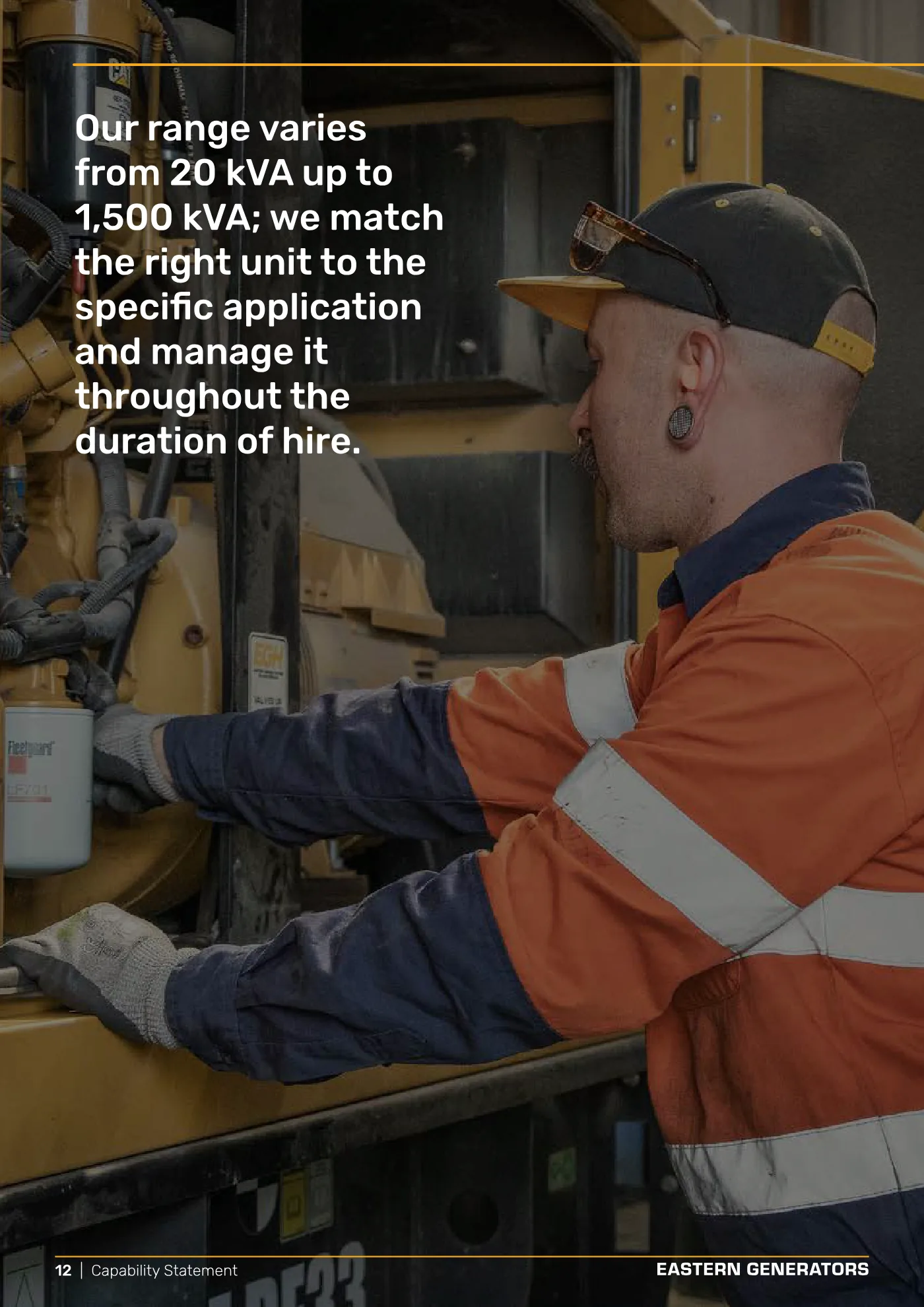
Our hire fleet is diesel, in standard and super-silent builds, because hire is the job it is best at. Where a site is noise-constrained we solve that with acoustics rather than fuel type: our super-silent sets run below 60dB at 7 metres.
If you are specifying a permanent installation rather than a hire, gas is worth putting on the table, and the honest comparison depends on your site's supply, emissions constraints and expected run hours. Tell us the site and we will give you a straight answer, including when the answer is not the machine we hire out.