Start with a list, not a number
The most common way this goes wrong is starting from the wrong number entirely: the size of the main switch, the rating of the old generator, or what the business down the road hired. None of those describe your load.
Instead, write down every piece of equipment that has to run while the mains are off. For each one you want the running power (kW or amps, usually on the compliance plate or in the manual) and whether it contains an electric motor.
Then split the list in two: what must run, and what would be nice. A small retailer with refrigeration, lighting, EFTPOS and a computer has a very different critical load to the same shop's full connected load with air conditioning and every power point live.
Step one: the running load
Add up the running power of everything on the must-run list. This is the load the generator carries continuously, and it sets the floor for the size you need.
Two things to watch. First, kW and kVA are not the same. Generators are rated in kVA, and the relationship between the two is the power factor, typically around 0.8 for a mixed commercial load. As a rough conversion, kVA is roughly kW divided by 0.8.
Second, do not treat every nameplate rating as though all of it runs flat out permanently. A three-phase air conditioner rated at 15kW does not draw 15kW all day. Use realistic running figures, and let the safety margin come from the sizing step, not from padding every line.
Step two: the starting load, which is the one that bites
Here is the part that catches nearly everybody. An electric motor draws far more current at the instant it starts than it does once it is turning: commonly three to six times its running current, and briefly more on a direct-on-line start.
So a site with a steady 20kVA running load can still need a much larger generator, because at some point the cool room compressor, the roller door and the workshop compressor all have to get moving from a standstill.
The number you actually need is the running load of everything else, plus the starting surge of the single largest motor. That combination, not the running total, is what determines whether the set holds its voltage or stumbles and trips.
Soft starters and variable speed drives reduce that surge substantially. If your gear has them, say so, because it can move you down a size.
Step three: leave sensible headroom
Once you have a figure, do not specify a generator that sits exactly on it. Aim to run the set at roughly 50 to 80 percent of its rating in normal operation.
- Too small and the generator runs hot, struggles on motor starts and has nothing left when you add a load you did not plan for.
- Too large and you pay for capacity you never use, and a diesel engine running at very light load for long periods develops its own maintenance problems.
Somewhere in that band gives you room to grow, room for a bad day, and an engine running where it is designed to run.
What that looks like in practice
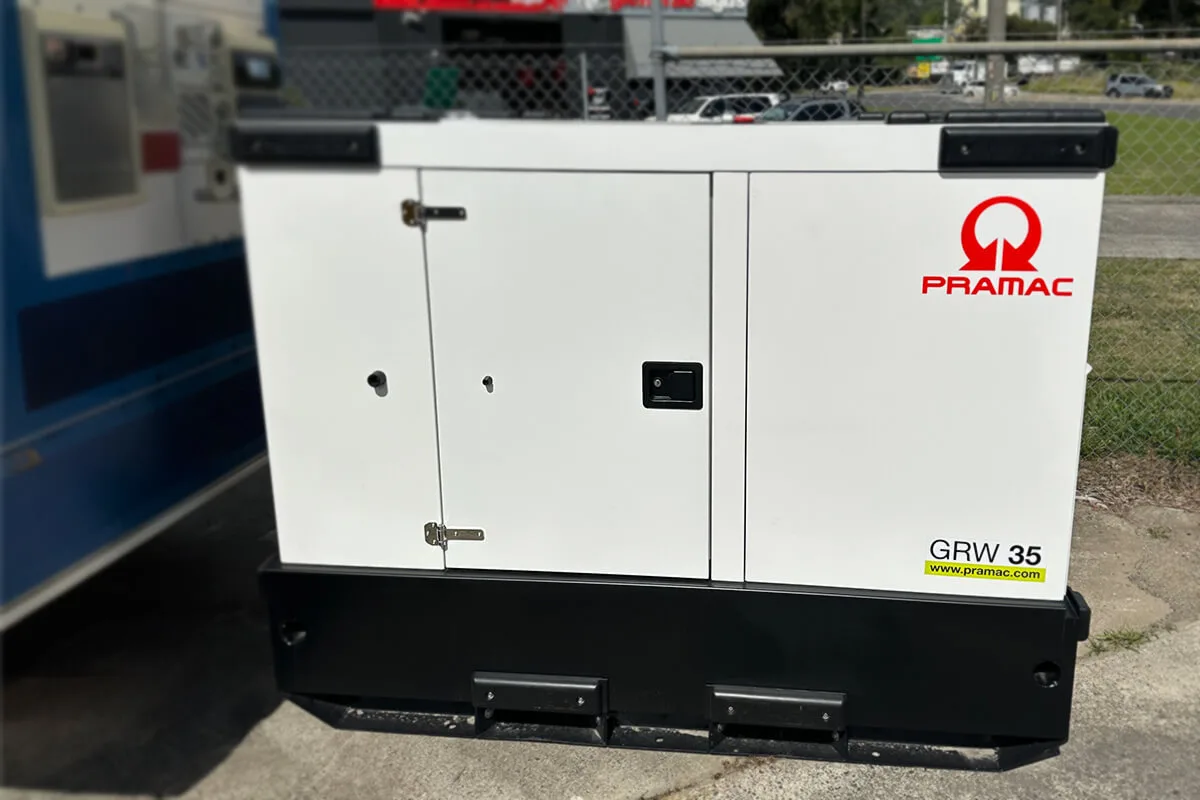
Every site is different, so treat this as a starting point for a conversation rather than a specification. Broadly, a small shop, office or cafe keeping lights, refrigeration and point of sale alive usually lands in the 20kVA – 60kVA band. A workshop or light manufacturing site with three-phase machinery and compressors more often sits between 60kVA and 150kVA. Above that you are into the territory where paralleling sets and load management start to be worth discussing.
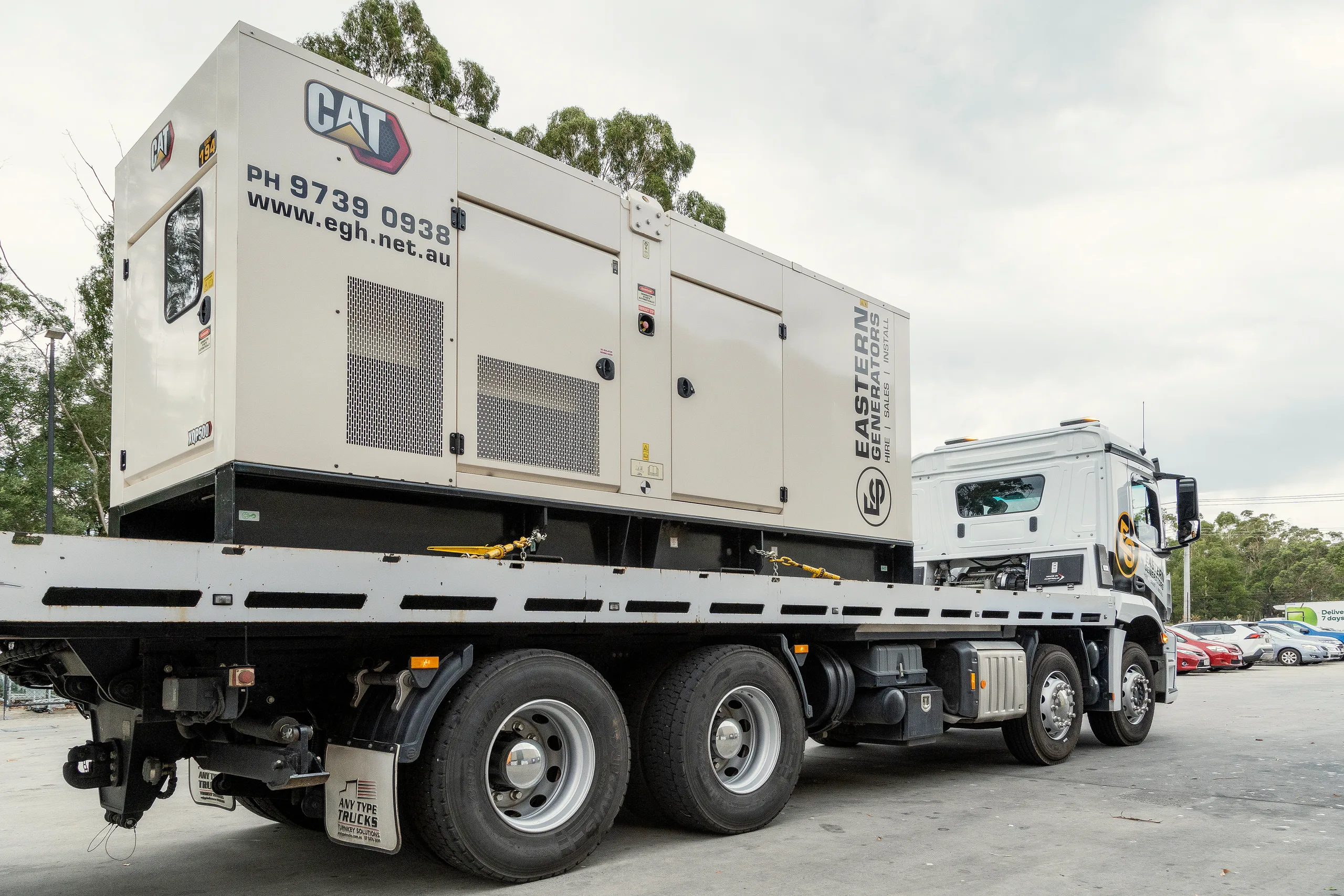
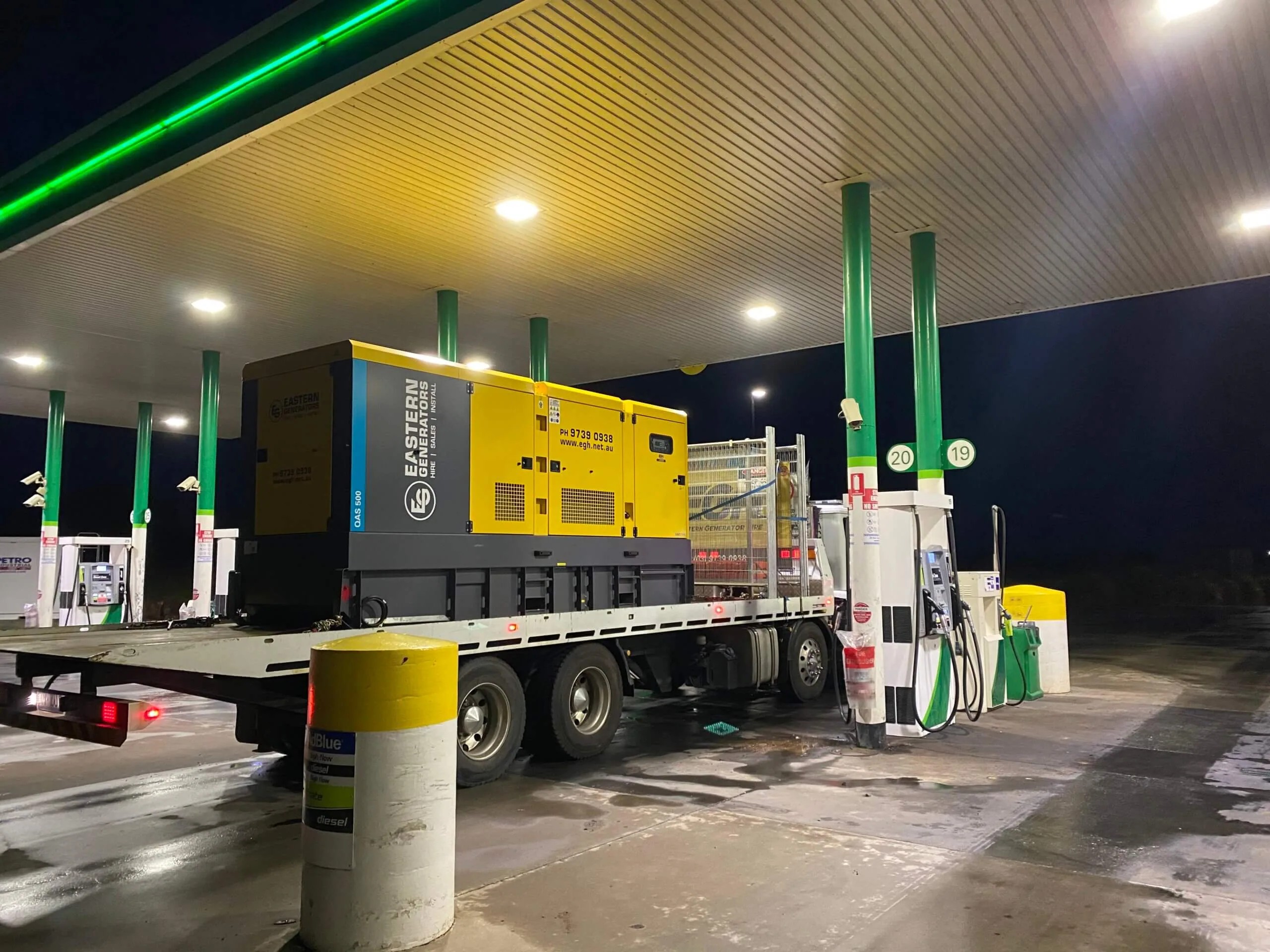
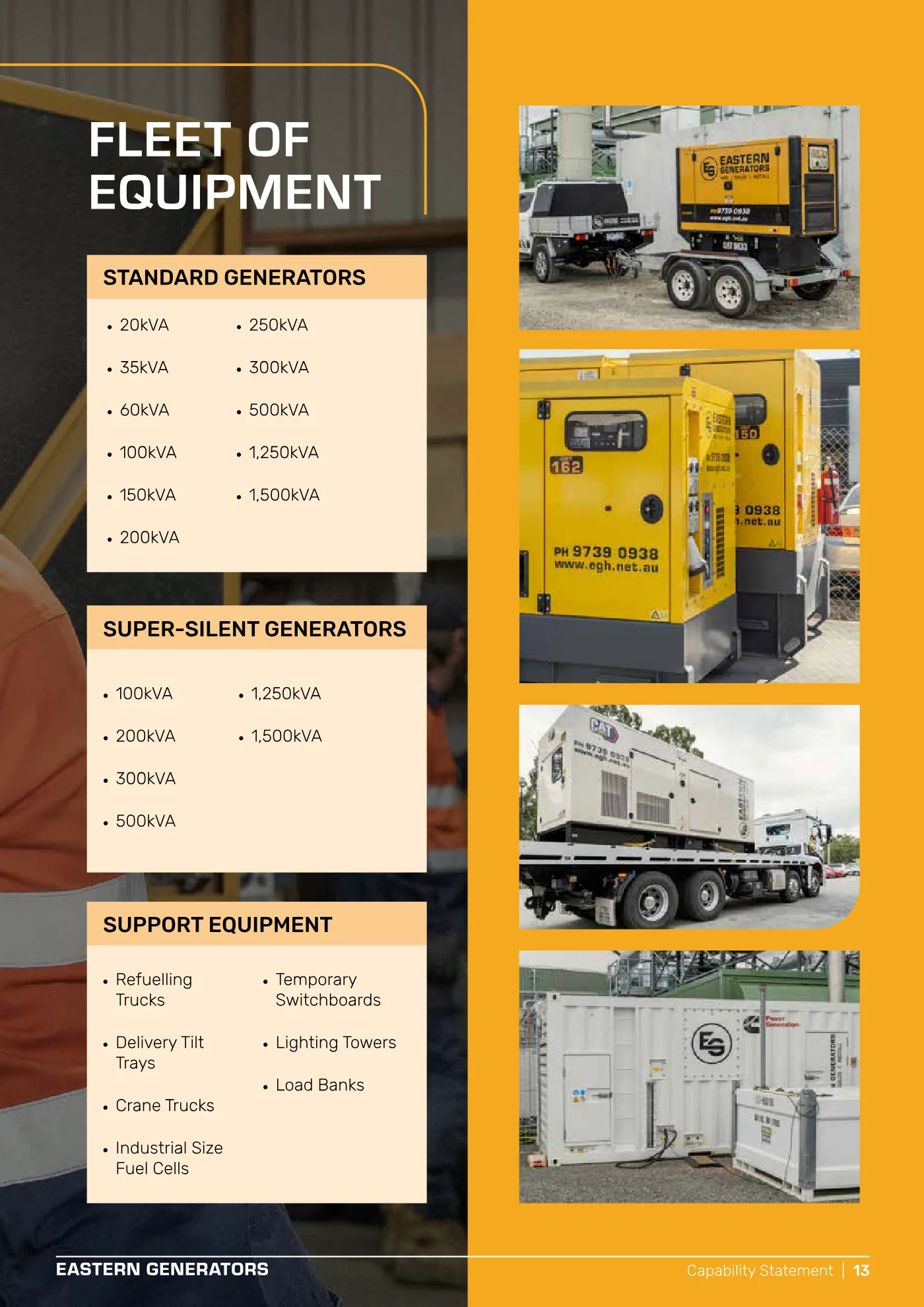
Our hire fleet runs from 20kVA – 1500kVA, so the size is rarely the constraint. Getting it right first time is what saves you money.
Work it through yourself with the generator sizing calculator, which handles the running and starting halves separately and gives you a recommendation with the reasoning attached. Or send us the equipment list and we will size it for you.