What counts as an emergency
Not every unplanned outage needs a generator on a truck within the hour. The question is not how dark the building is, it is what the outage costs per hour and how long the network operator says it will last.
The jobs that genuinely need emergency power tend to share a few traits: a load that cannot be shed (refrigeration, medical, data, process plant), a contractual or regulatory obligation to stay running, or a site where the work simply stops without power and a crew of people stands idle.
- Storm and network damage. Distribution faults after wind, fire or flood, where the restoration estimate runs into days rather than hours.
- Planned outages that overran. A switchboard upgrade or a shutdown that did not go back together on schedule.
- Failed standby plant. The installed generator did not start, or started and dropped its load.
- Capacity you no longer have. A transformer or main switchboard out of service while the site still has to trade.
If any of those describe you, the clock matters more than the paperwork. Ring first, sort the purchase order later.
The four things we ask on the phone
A good emergency call takes about three minutes. We are trying to get to a machine size, a truck and a connection method, so the questions are always the same four.
- What has to run? Not the building's total capacity, the load that actually matters. A 400 amp main switch does not mean you need 400 amps of generator.
- Where does it connect? A generator inlet or changeover switch means we can be live shortly after arrival. No inlet means our electricians make a temporary connection at the board.
- What can we get on site? Gate widths, hardstand, crane or hiab access, and whether the delivery vehicle can get within cable distance of the switchroom.
- How long? A three-day run and a three-month run are the same machine but very different fuel, servicing and refuelling arrangements.
Write those four answers down for each of your sites now and put them somewhere the after-hours duty person can find them. It is the single cheapest thing you can do to shorten your own outage.
Sizing under pressure
The temptation in an emergency is to order the biggest set available and stop worrying. That is expensive, and a heavily oversized generator running at very low load for weeks is not good for the engine either.
The number that catches people out is not the running load, it is the starting surge. Motors, compressors, pumps and lifts draw several times their running current for the moment they start, so a site with a modest steady draw can still need a much larger set to get everything turning without the generator stumbling.
If you have five quiet minutes, our generator sizing calculator walks through running load and starting load separately and shows the working. In an actual emergency, tell us the equipment list and let our team do the maths.
What actually arrives
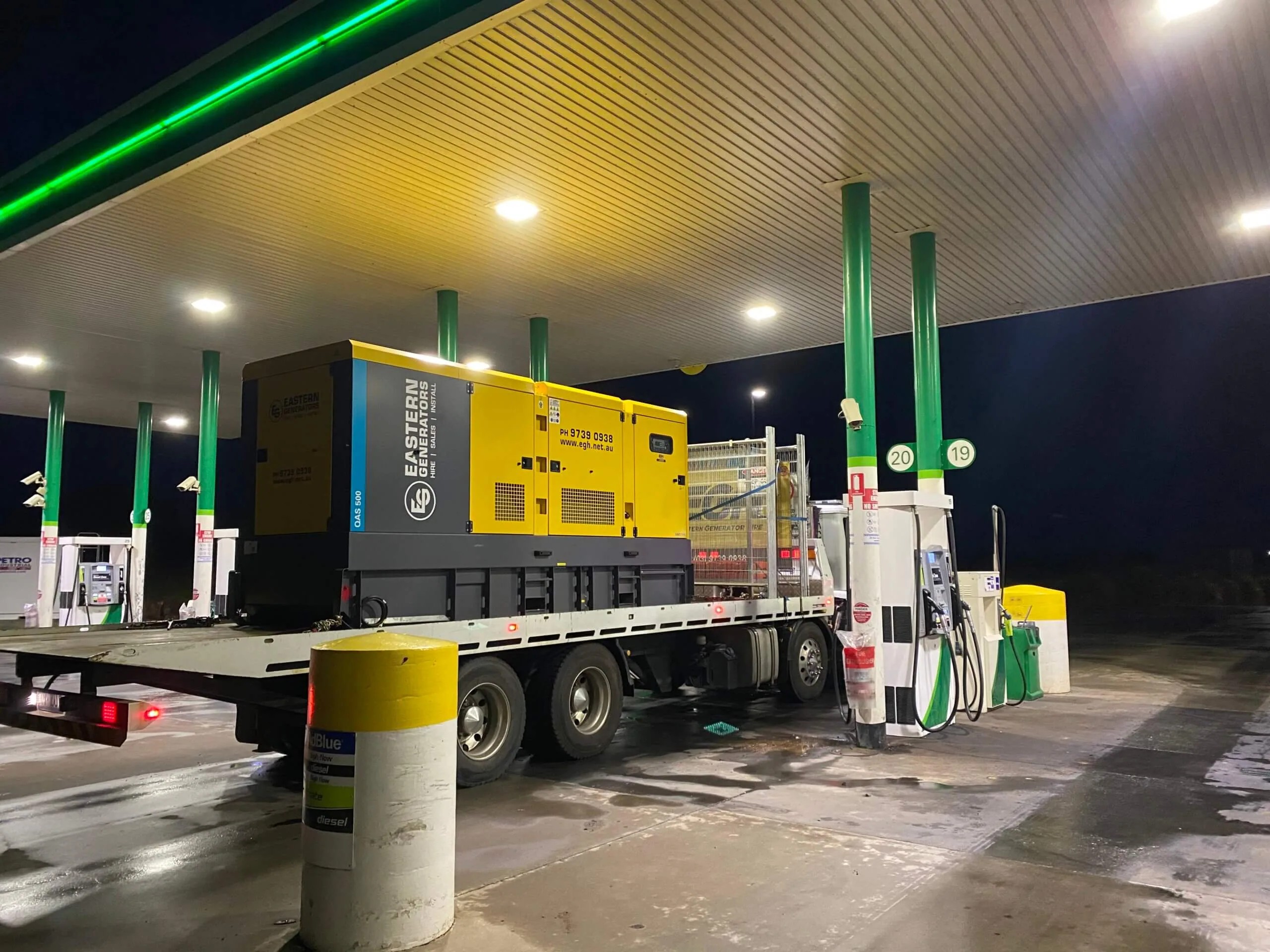
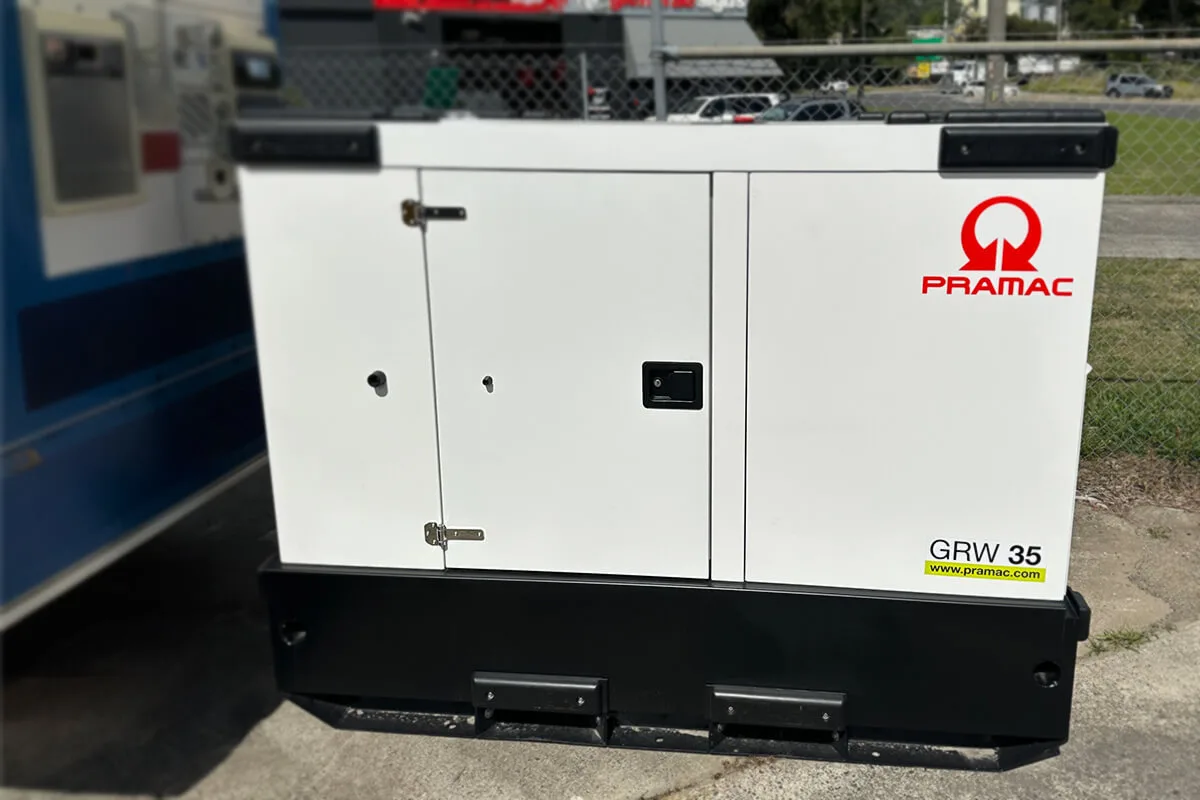
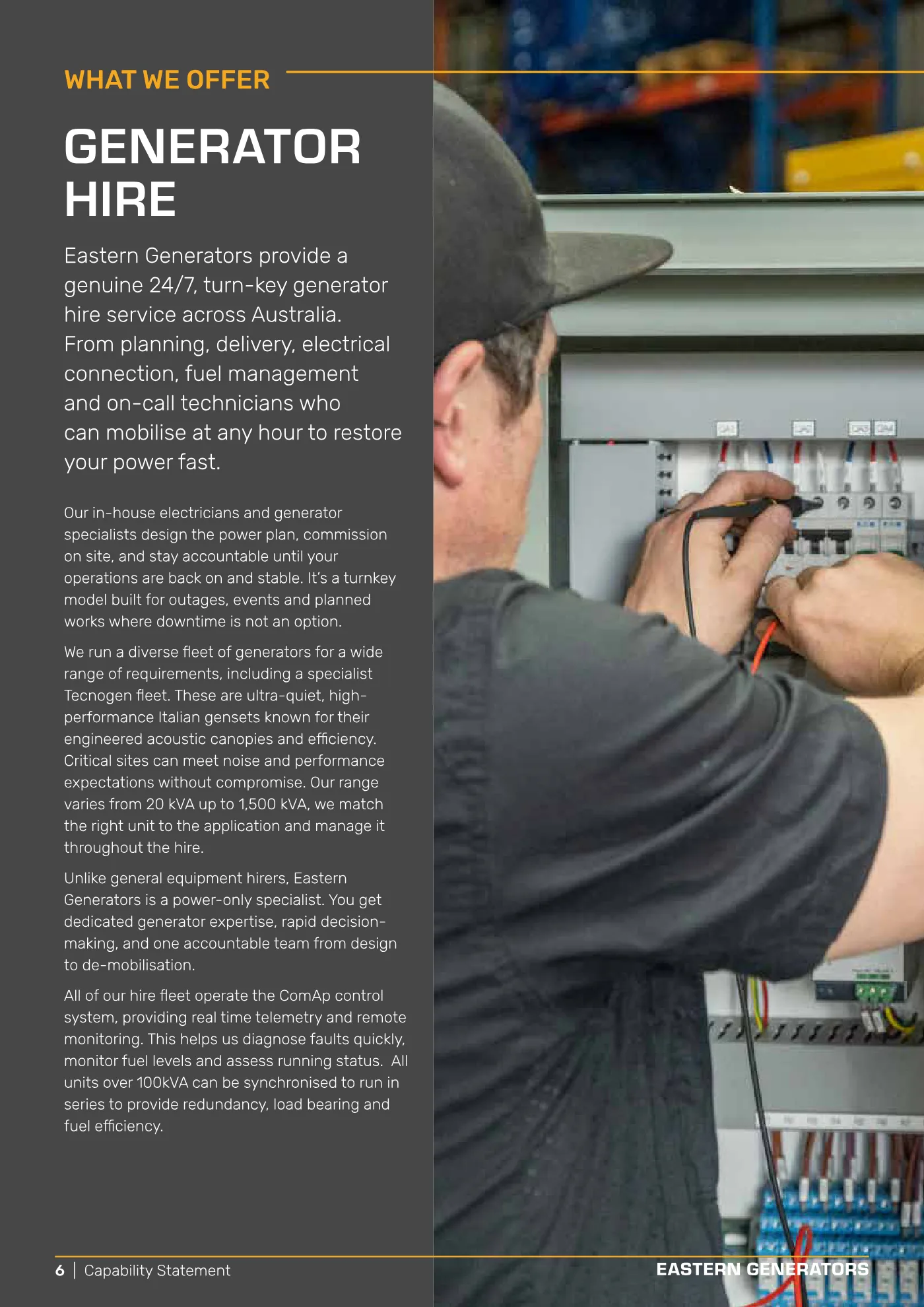
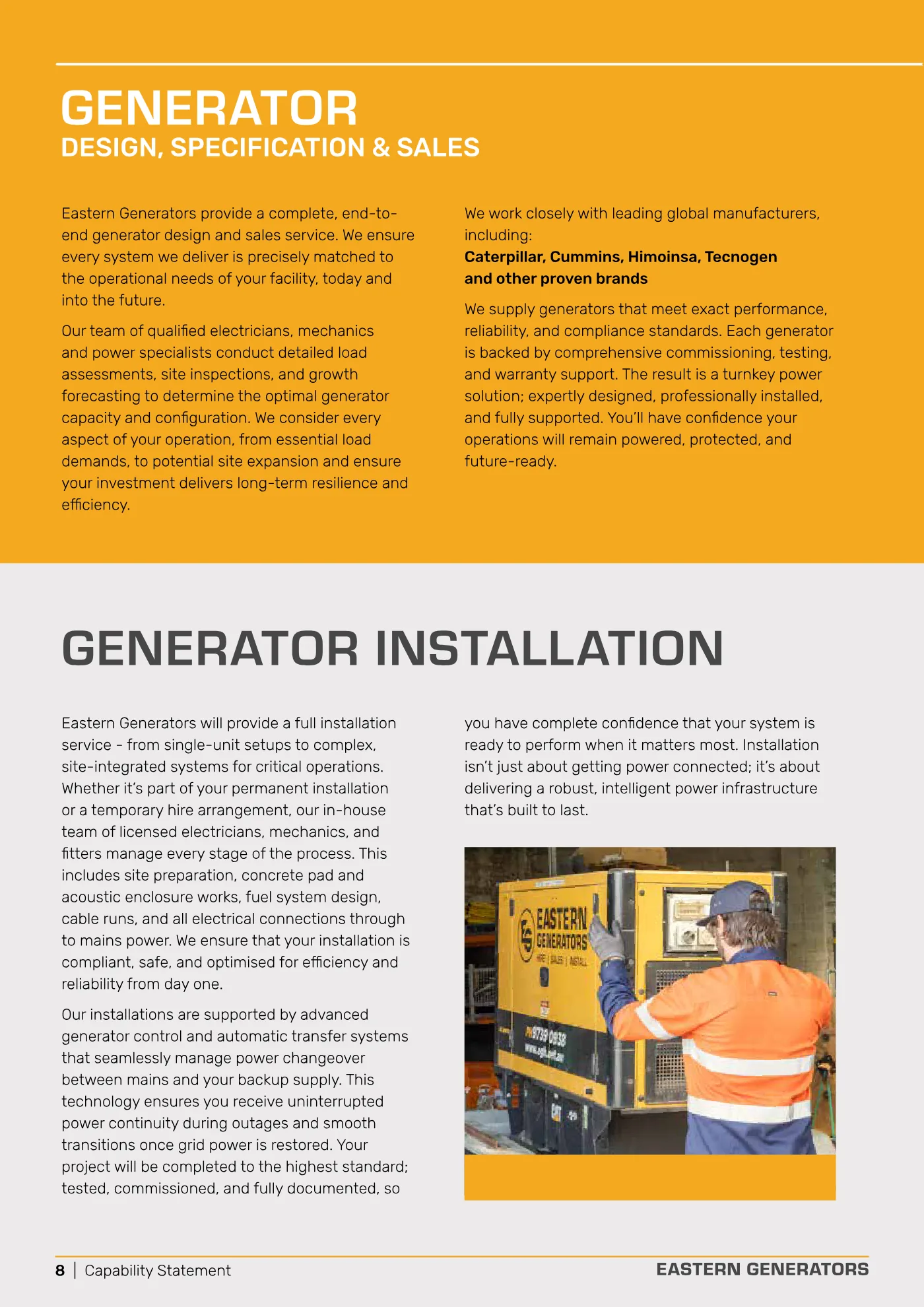
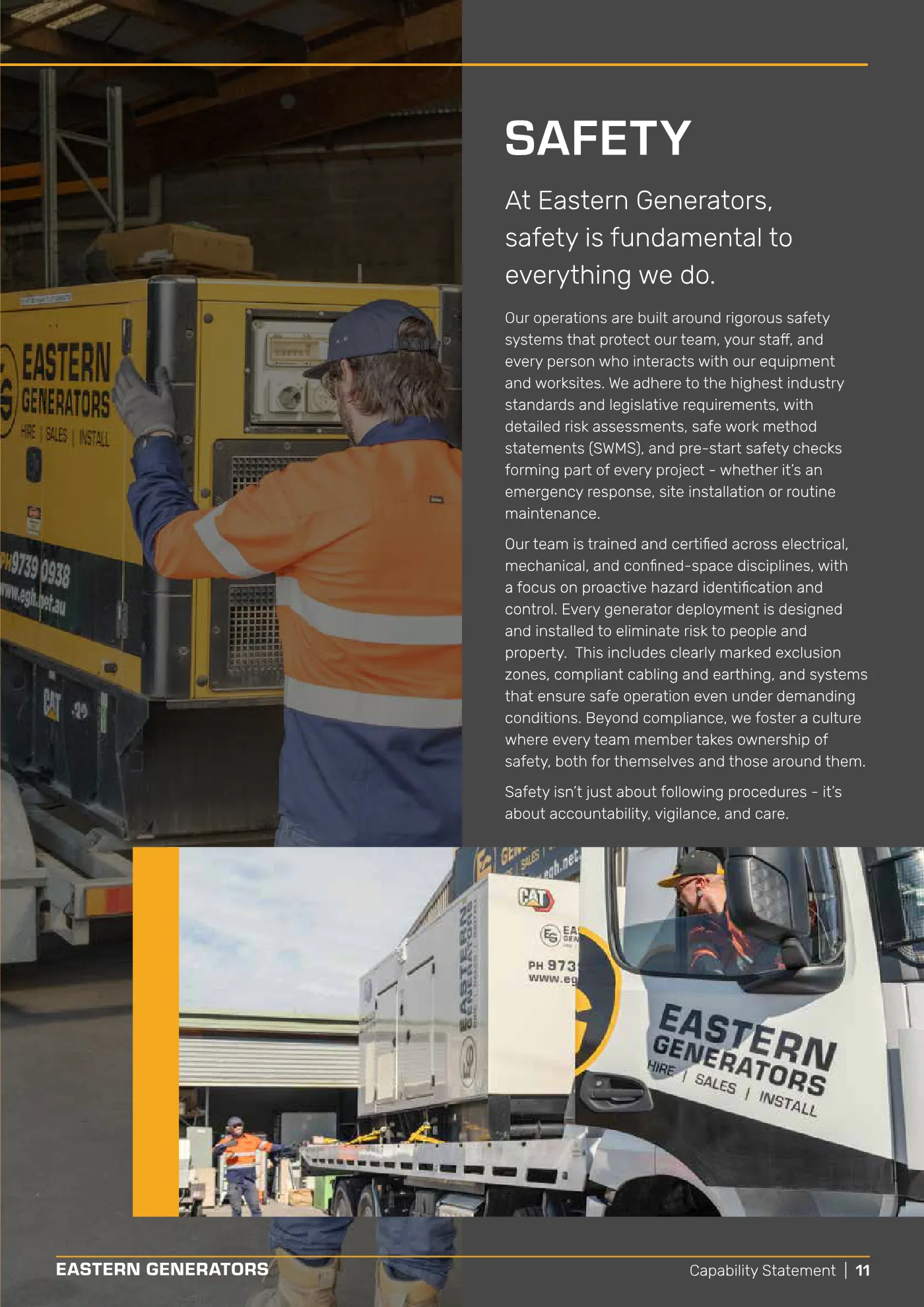
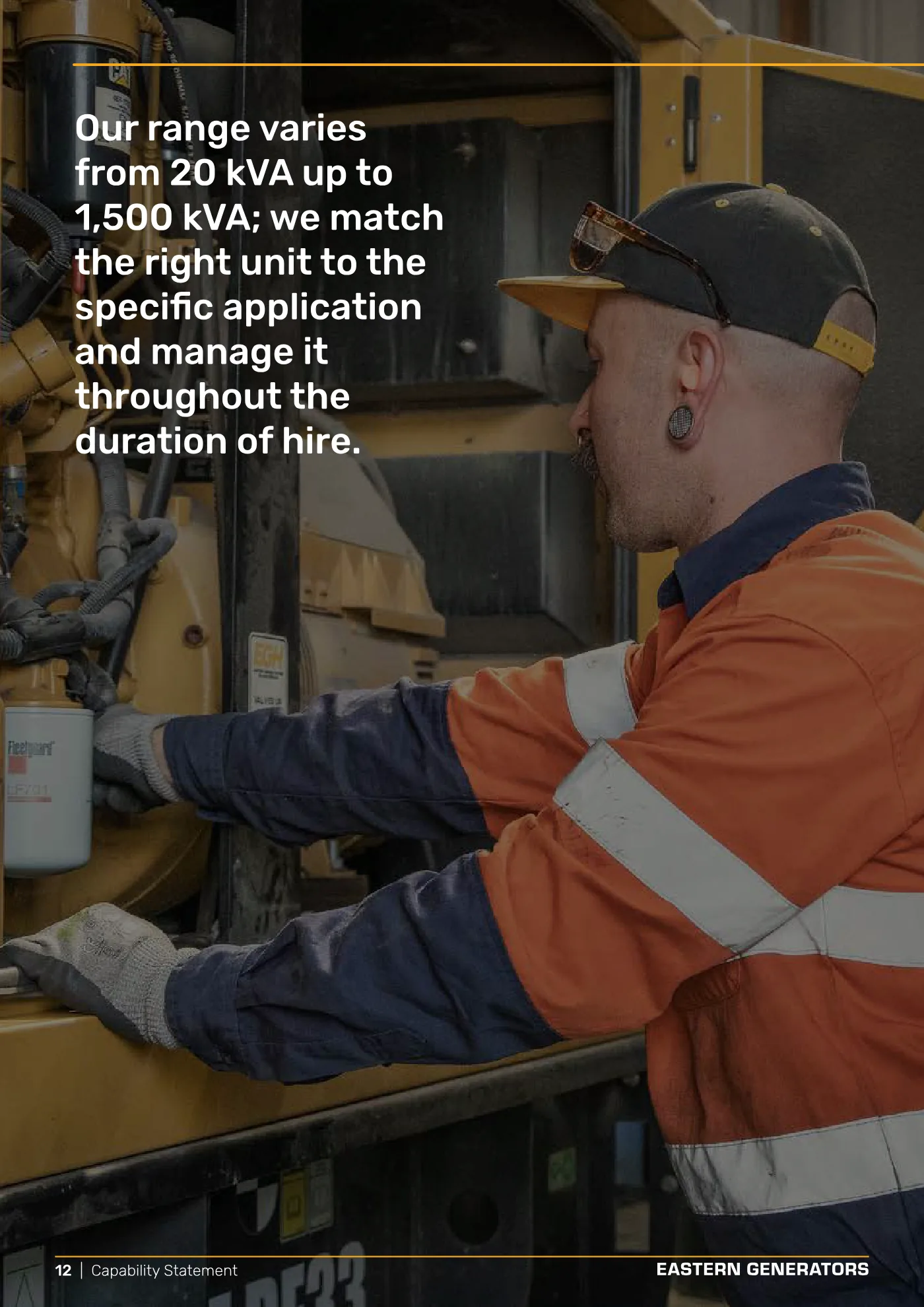
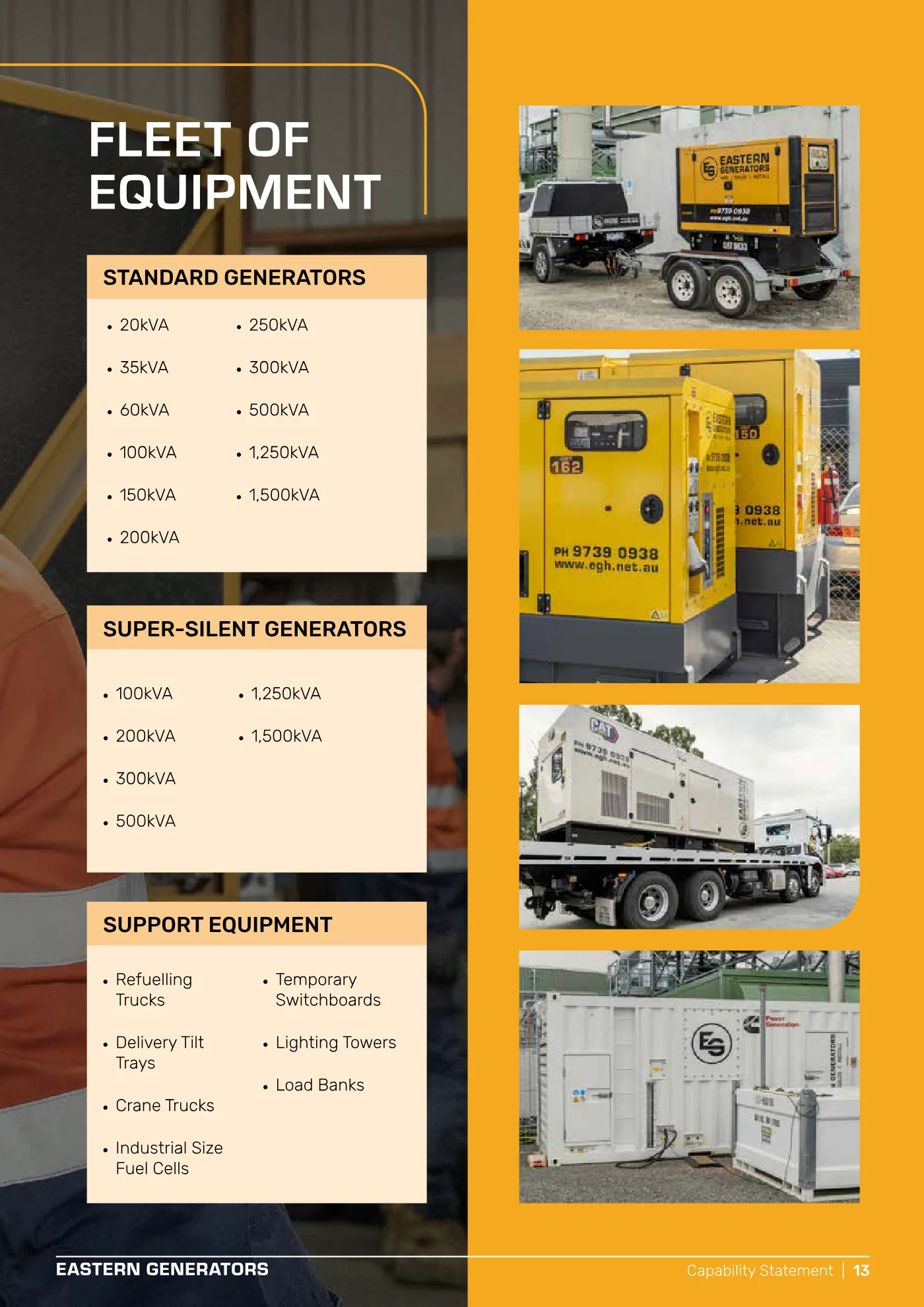
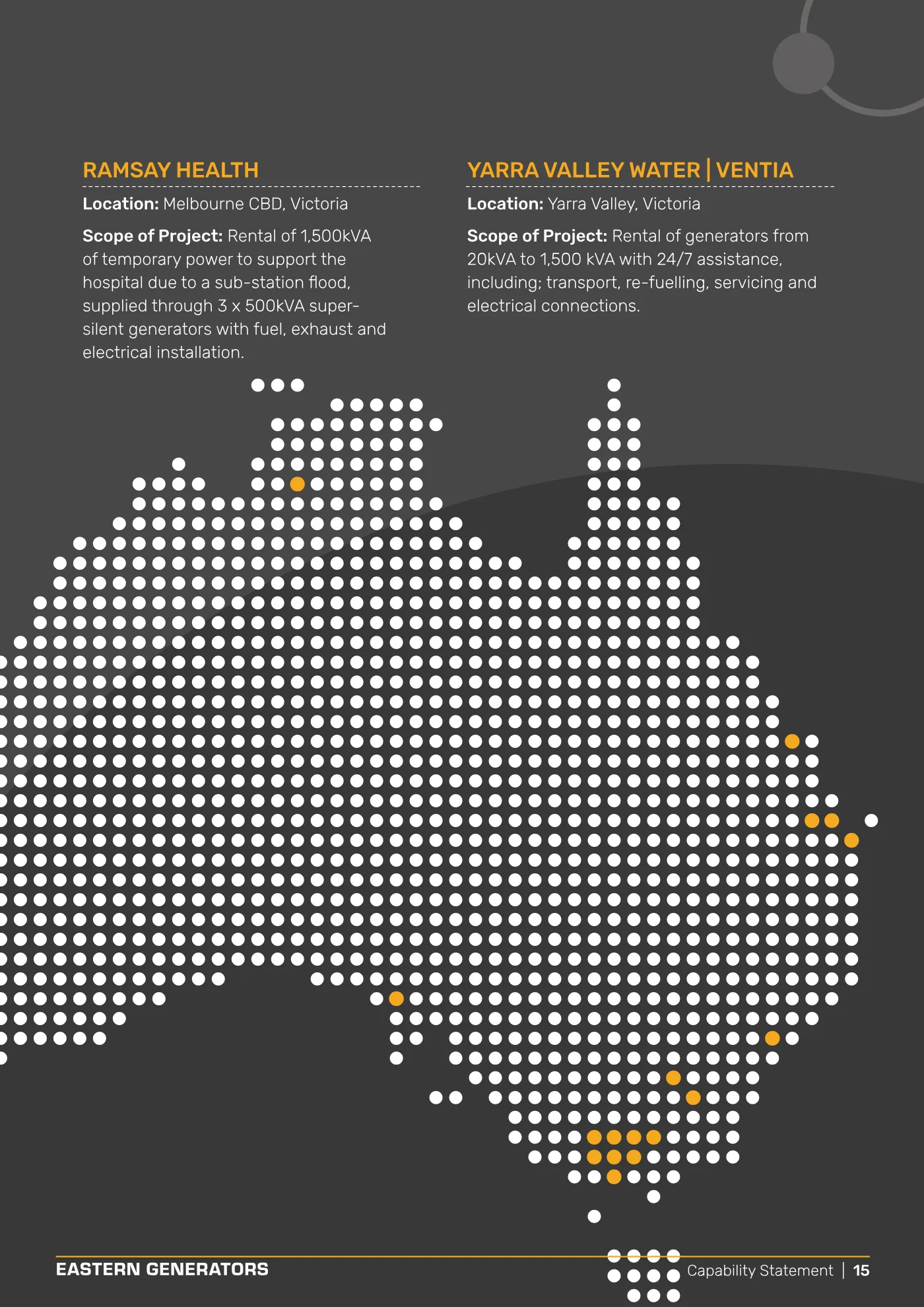
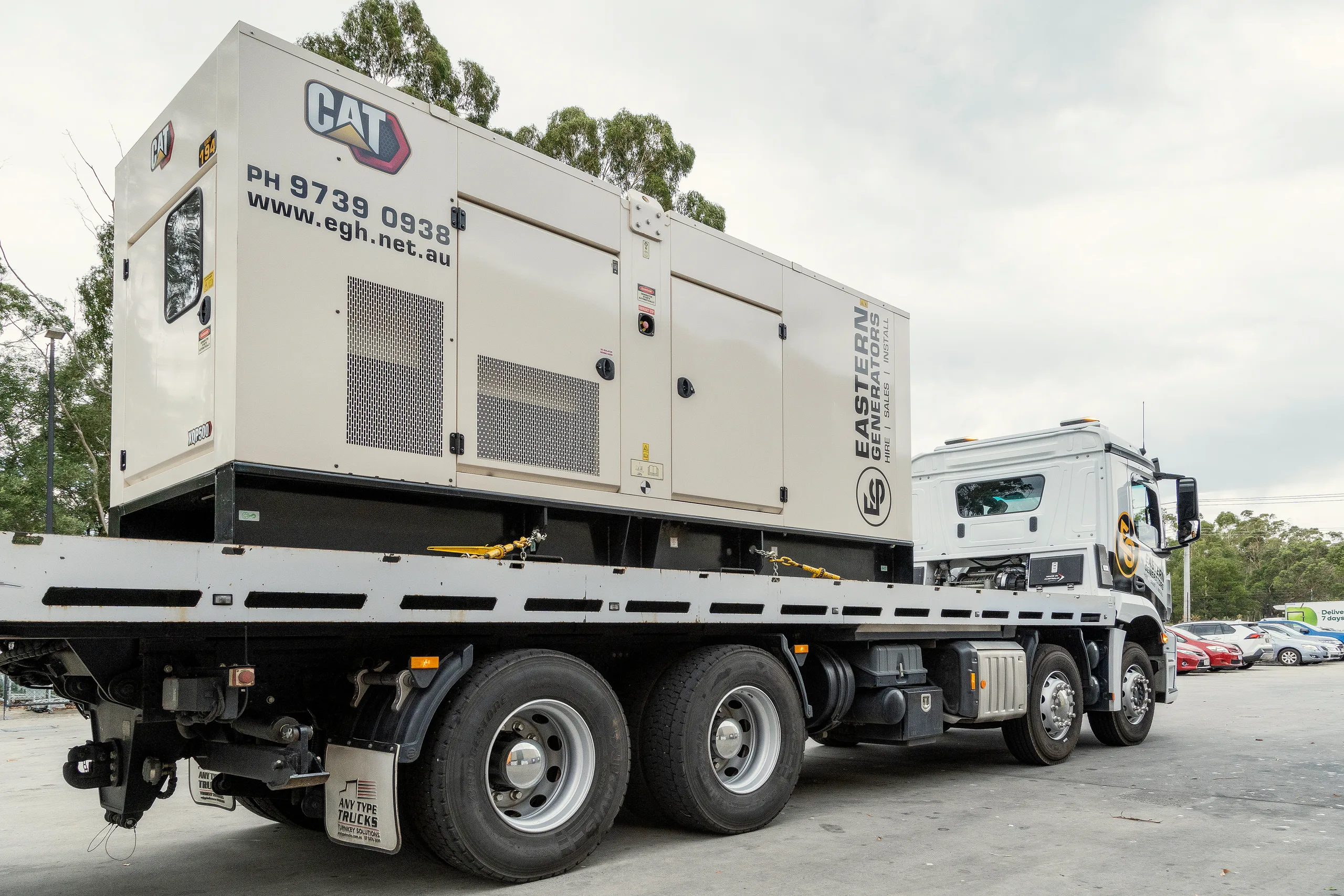
For most emergency jobs, what turns up is a trailer-mounted or skid-mounted diesel set between 20kVA and 1500kVA, delivered on one of our own trucks with cable, connection gear and an electrician who can terminate it.
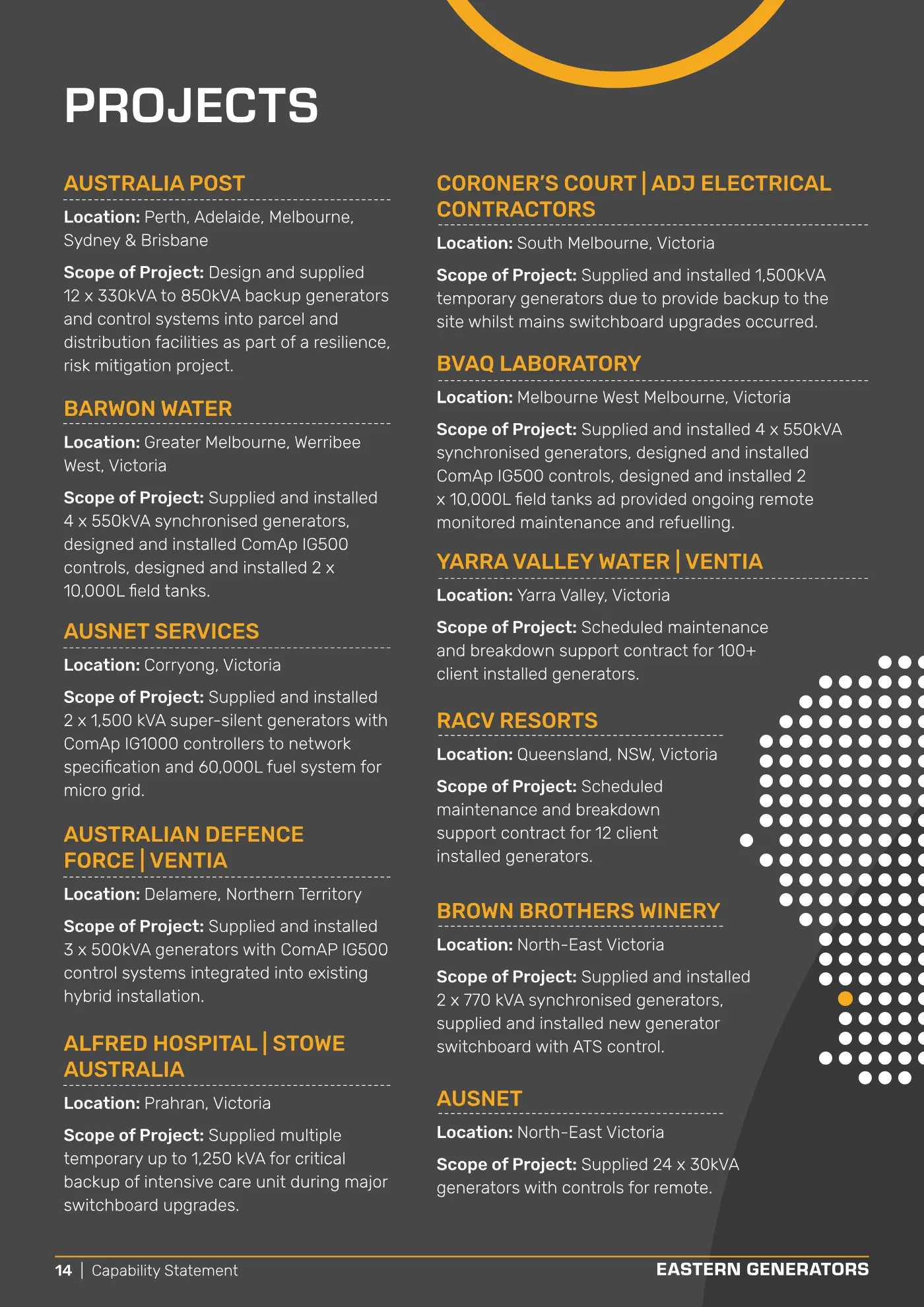
Above 100kVA we can run sets in parallel, which matters in two ways during an outage: you can build capacity out of the machines that are actually available, and you get redundancy, because losing one unit does not take the whole site down.
Fuel comes with the machine. For longer runs we bring bunded fuel cells and put the site on scheduled refuelling from our own trucks, so nobody on your team ends up managing jerry cans at midnight.
Choosing a supplier before you need one
Emergency response is the one part of this industry where the difference between suppliers is stark, and it comes down to a simple question: do they own the machine, the truck and the electrician, or are they ringing around on your behalf?
- Own fleet. A broker cannot dispatch what they do not have. Ask how many units they hold and where.
- In-house trades. Connecting a temporary generator at a live main switchboard is electrical work. If the after-hours crew is subcontracted, your response time is somebody else's queue.
- A real 24/7 number. Not an answering service that takes a message for the morning.
- Local depot. Distance is response time. Ours is in Kilsyth, in Melbourne's eastern suburbs.
Set up an account with someone who ticks those boxes while nothing is wrong. It costs nothing and removes a whole layer of friction from the worst day of your year. Our emergency generator hire line is staffed 24 hours per day, 7 days per week.