Plans that stop at 'arrange a generator'
We get called by a lot of well-run businesses with genuinely thoughtful continuity documents. Fire, flood, IT, supply chain and staffing are usually covered properly. Then power gets one line: arrange a generator.
That line assumes four things nobody has checked. That somebody knows what size. That the building can accept a temporary supply. That a machine is available. And that the person on duty has authority to commit the money. On the night, all four get discovered at once.
What to decide while nothing is wrong
The whole of the preparation fits on one page per site. It is worth more than any other hour you will spend on continuity.
- The critical load. Not the building's capacity. What must run, with running and starting figures.
- The connection point. Is there a generator inlet or changeover switch? If not, where would a temporary connection be made?
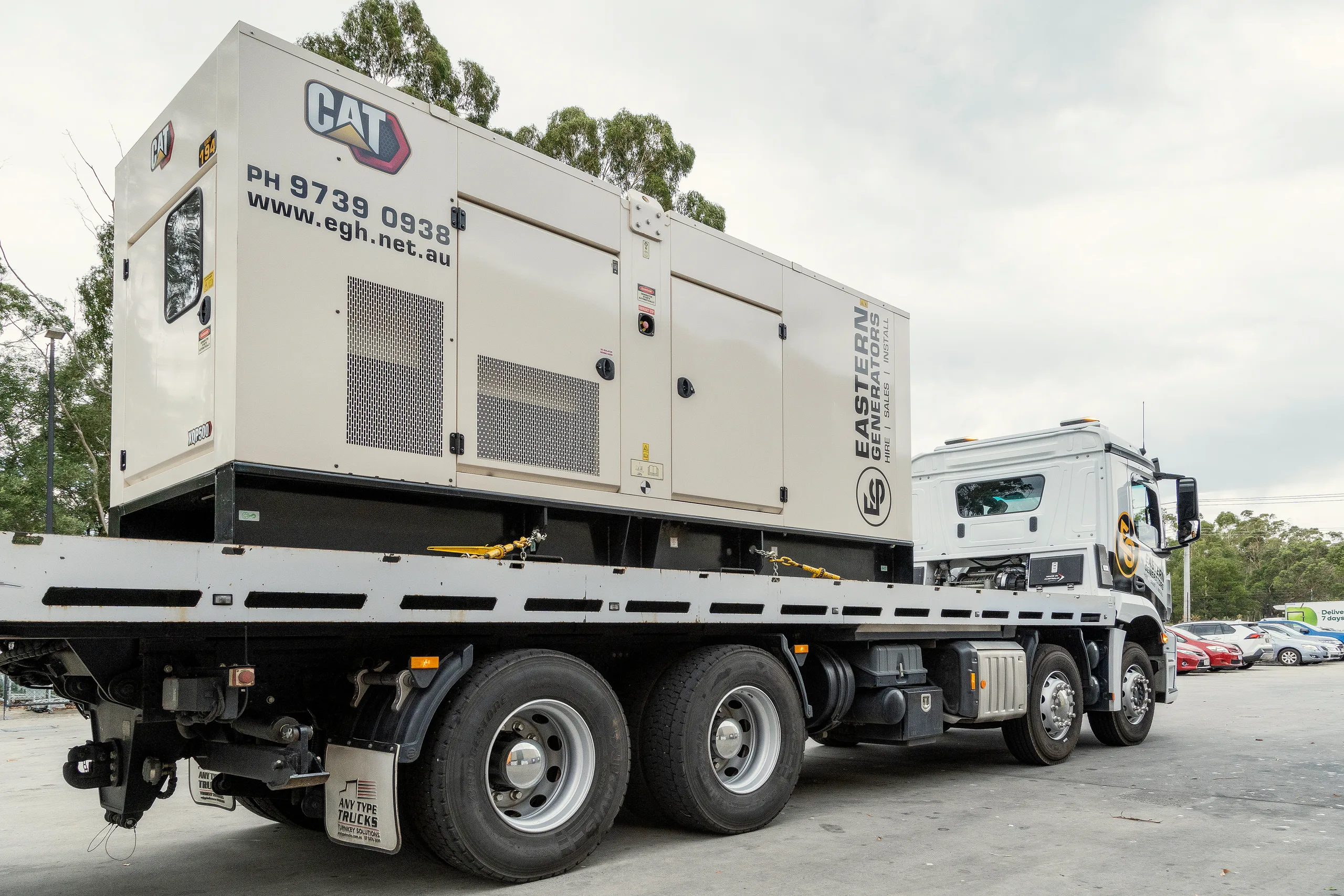
- Access. Gate widths, hardstand, crane or hiab requirements, and how close a truck gets to the switchroom.
- Constraints. Noise limits at the boundary, fuel storage restrictions, out-of-hours conditions.
- Authority. Who can approve the spend outside business hours, and what their number is.
Print it. Put it where the after-hours duty person will find it, not only on a server that may be part of the outage.
Why hire suits continuity cover
For an outage you hope never happens, hire is usually the better commercial answer than ownership.
- No idle capital. You are not carrying an asset that earns nothing between events.
- Right size on the day. The machine matches the actual event, rather than the one you predicted when you bought.
- Someone else's maintenance. The servicing, testing, compliance and fuel obligations sit with us.
- Scalable. If the outage is worse than expected, add units. Above 100kVA sets synchronise in parallel.
- Operating cost. Charged against the event, which is generally easier to treat as a recoverable cost.
Where a site genuinely needs power available in seconds with nobody attending, that is an installed standby argument instead, and we cover the trade-off in hire or buy.
Test the plan, not just the equipment
Businesses that own a generator test the generator. Businesses that plan to hire one rarely test anything, because there is nothing on site to test.
There is still plenty to rehearse. Can your duty person find the one-page site sheet? Does the phone number on it reach a supplier who answers at 2am? Does the person with spending authority know they have it? Is the switchroom key where the plan says it is?
Half an hour walking through those questions will find at least one broken assumption. It always does.
Set up the account before you need it
The single most useful preparation is the least interesting: open an account with a supplier who holds their own fleet, trucks and electricians, and give them the site details in advance.
It costs nothing, and it removes credit checks, site familiarisation and specification guesswork from the worst night of your year. We keep site notes for customers exactly so the call can be short. Our emergency line is staffed 24 hours per day, 7 days per week.